Your network carries several ISPs. Most OSS/BSS was built to assume it carries one.
AEX is the wholesale operations platform for open access networks, connecting every ISP to your network through a single interface.
100+
retail ISPs selling across AEX-run networks
40+
retail ISPs on a single network
300K+
network devices managed on the platform
Built for Open Access from Day One
AEX was built for open access operators and has run that way for more than a decade: a wholesale catalog your ISPs build their retail products against, per-ISP ordering and provisioning, an ISP-facing API and portal, and billing that runs both ways. Adding a retailer is a configuration against a standing interface, not an integration project on both sides.
The Problem
Open access is easy to describe and hard to run. The industry said so itself in February 2026, when ATIS stood up the Open Access Network Forum, chaired by AT&T, with six working groups: network architecture, initial ISP and OAP onboarding, common interface requirements, field services, common data interchange, and customer provisioning. That is not a research agenda. It is a list of the places open access currently breaks.
The Solution
AEX did not add open access to a retail platform. We built it for open access operators in a market where one network carrying dozens of competing retail ISPs was the norm rather than the exception, and we have run it that way ever since. More than a hundred retail ISPs sell over AEX-run networks today. On one of them, more than forty retail ISPs trade side by side over the same access network, each with their own products, their own prices, and their own subscribers.Gigapower’s Chief Technology and Infrastructure Officer put it in one line:
"If every time you add an ISP it’s a bespoke integration, you don’t have open access." The record agrees with her. Three years after launch, the flagship US open-access venture carries two third-party ISPs. As recently as 2024, an operator with more than 400,000 passings had a single retail customer. The fiber is open. The operation is not.
What that means in practice
|
01 Wholesale and retail catalogs in one place Running open access is not running a retail ISP with extra steps. The catalog has two sides, the order has a third party in it, provisioning has to know who the subscriber is, and the money moves in two directions. AEX handles all four as the normal case, not as an extension. |
02 Orders that know which ISP they belong to An order carries a subscriber, an address, and an ISP product. The address resolves to a key before the order can proceed, so no free text enters the record, and the work order routes to the ISP the subscriber chose. That ISP sees the order and where it has got to, in its own portal and over the API. |
|
03 One contract, every ISP on your network The AEX ISP API covers what a retailer needs to sell, order, provision, and support over your network, and every ISP works to the same contract. Onboarding a retailer is a commercial agreement and a catalog, not a development project on both sides. |
04 A portal your ISPs run themselves ISPs build and manage their own products and coverage in their own view of the platform, and work their own orders and services there too. Fewer tickets into your operations team, and a retail partner who can move without waiting for you. |
|
05 Billing that runs in both directions One engine covers recurring, prepaid, postpaid, and wholesale. Wholesale invoicing produces a bulk billing file per ISP each month. Split billing lets you bill the subscriber on behalf of an ISP and automatically reimburse that ISP its share, turning the hardest part of an open access commercial model into a scheduled job. |
05 Provisioning on Any Hardware Zero-touch detect, configure, activate and roll back at Layer 2 and Layer 3, across ten OEM ecosystems and any TR-069 device through the AEX ACS. Per-ISP VLANs are held against the subscriber’s service and applied to the terminal in the home. Your interconnect and your handoff to each ISP stay yours; AEX drives the service that runs on top of them. |
What makes AEX different?
#1
One platform for open and closed networks
#2
Open your network when you're ready
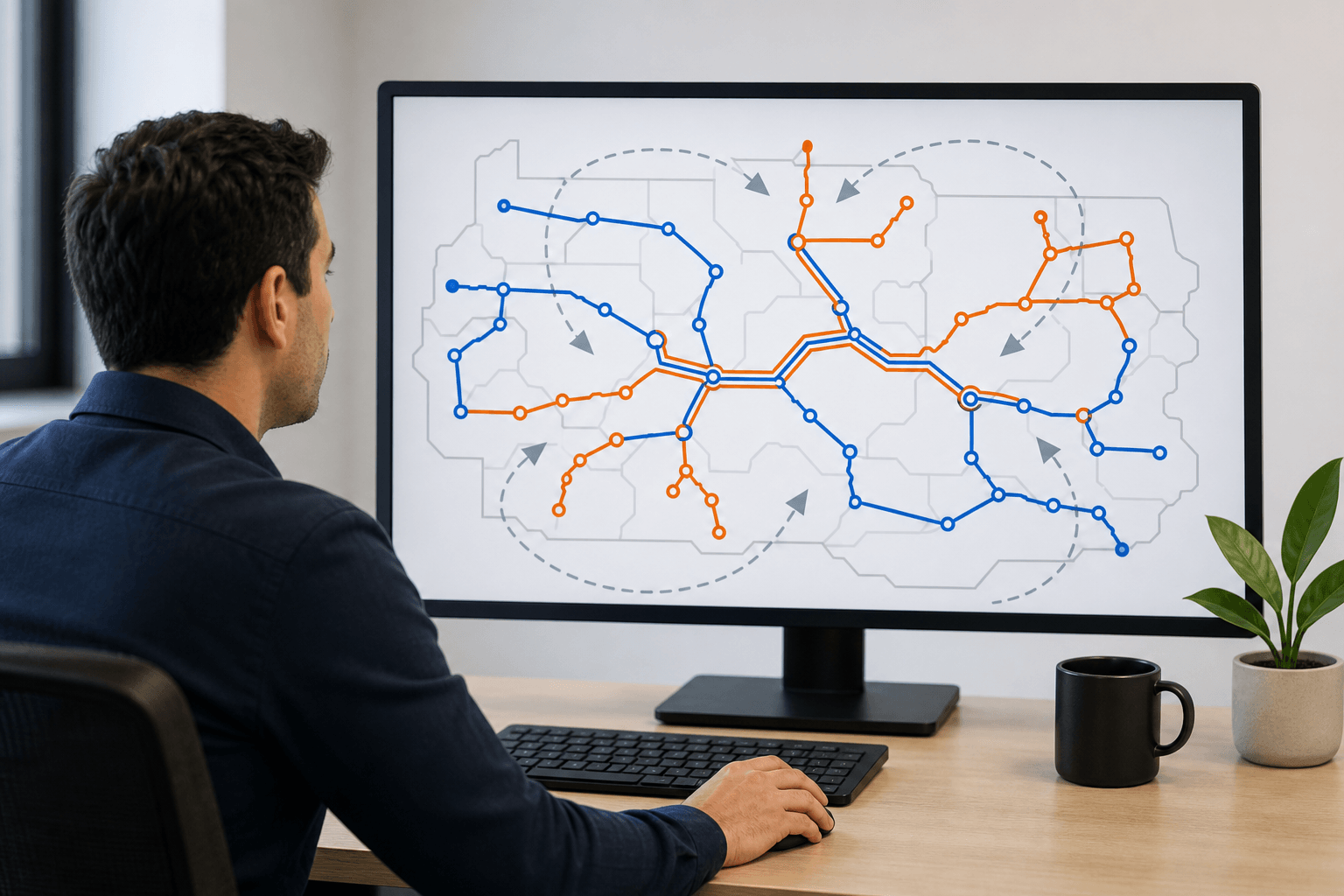
If you run a closed network today and may open it later, you can do that on the same platform. Opening a network means changing configuration and commercial terms, not moving to a new system. It still takes real work across networking, billing, and product management, and we will plan it with you in detail.
# 03
Built on standards, not on a connector catalog
Better with the rest of AEX
On its own, AEX Software runs an open access operation end-to-end. Add AEX Field Service and the install that connects a subscriber to their chosen ISP closes straight into provisioning and same-day billing, with nobody re-keying anything in between. Add AEX Network Services and the backbone; the 24/7/365 NOC and the white-label subscriber helpdesk underneath the network come from the same company, on one contract.
AEX in Action:
Open the network. Keep operations simple
FAQs
Do I have to run open access to use AEX?
No. Closed access is the same platform with one retail brand configured, and plenty of operators run it that way. The point is that you are not choosing a system that forecloses the other model, in either direction.
We’re closed access today but may open later. What does converting actually involve?
It’s a configuration and commercial exercise rather than a replatform, but it isn’t nothing. It touches three areas: how subscriber sessions are handed off on the network, how wholesale and retail billing split, and how your product catalog is restructured so ISPs can build against it. We’d work through all three with your team before quoting a timeline.
How long does it take to bring on a new ISP?
It depends far more on your commercial process than on ours. On the platform side, an ISP needs an entity, a catalog relationship, portal and API credentials, and VLAN assignment on the network. Our role is to make sure none of that is bespoke.
Does BEAD require open access?
No. It never required retail open access, and the narrower middle-mile interconnection and wholesale requirement in the original NOFO was removed in June 2025 under the Benefit of the Bargain restructuring. Where public money does favor open access, it’s at the state level, New York’s ConnectALL municipal program being the clearest current example.
Do our ISPs get their own portal and their own API?
Both. ISPs work in their own view of the platform for products, coverage, customers, services, and work orders, and integrate to the AEX ISP API for the same functions. Smaller retailers tend to live in the portal; larger ones integrate.
Can we run open and closed access at the same time?
Yes. The model is set per network, so an operator running closed access in one market and open access in another runs both from one system, with the rules for each applied automatically.
Recent Resources