Every operator I talk to right now is dealing with the same math problem. Industry estimates put fiber workforce demand at roughly 178,000 workers through 2032, split between new positions and the wave of retirements coming as the technicians and engineers who built these networks age out. At the same time, that same labor pool is being pulled toward data center builds, which are hiring for the same skills and often paying more.
You cannot recruit your way out of a gap that size fast enough. I want to walk through why, and where I think the honest answer sits.
The hiring math doesn't close this gap alone
Training programs are expanding. FBA's OpTIC Path workforce initiative is now active in more than 20 states, and that's real progress. But it's progress on a multi-year timeline against a shortage that's already here. Meanwhile BEAD-funded construction is adding new PoPs and new subscribers to networks that, in a lot of cases, are still staffed for the network they had two years ago.
The gap isn't only about open headcount either. When your most experienced engineers retire, the knowledge that made them fast goes with them: which node has a quirk that only shows up months later, which fix actually worked last time versus what's in the manual. That knowledge rarely lives anywhere but in people, which is the exact challenge we dug into in how fiber operators protect field capacity when experienced technicians leave. A NOC that was properly staffed for last year's footprint is often running the same headcount against a much larger one this year, which is exactly the scaling problem I wrote about in why NOC strategy becomes the weakest link as operators grow.
Where AI is realistically picking up the slack
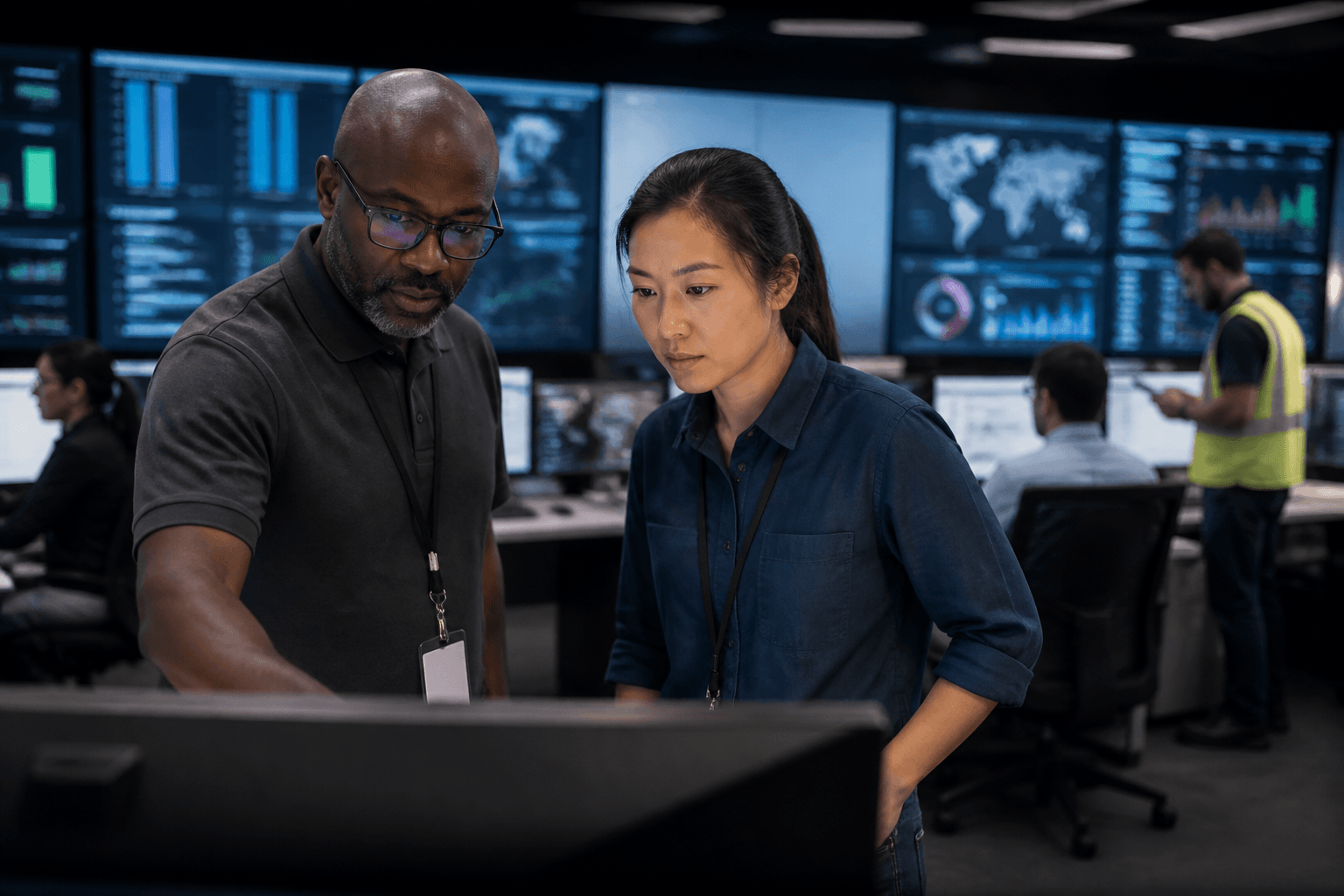
This is the part of the conversation that used to be mostly hype and is now mostly practical. Vendors across the industry are moving AI out of pilot projects and into production NOCs: correlating alarms across systems instead of triaging them one at a time, running automated fault diagnosis against known patterns, and in some cases taking natural language questions from engineers instead of requiring a dashboard query.
What's notable is where the caution sits. Almost every serious operator and vendor I've spoken with is keeping a human in the loop deliberately. Nobody credible is handing an AI agent write access to make changes on a production network unsupervised. The realistic, available-today value is an AI that triages and diagnoses faster, so the engineers you do have can cover more ground without burning out or missing something that matters. That's the exact day-to-day difference I described in Marcus's story: the same alerts, the same nine years of experience, but far less time lost chasing down what turned out to be a one-line fix.
We're digging into this exact question live in an upcoming expert panel with the Fiber Broadband Association, where I'll be going deeper on where AI is actually earning its place in the NOC right now. (Link this phrase to the FBA registration link once you have it.)
What this looks like in practice
AEX's approach to this is Agent AEX, an AI-assisted network troubleshooting agent running inside the AEX Software platform's monitoring layer. It doesn't replace your NOC team. It correlates root cause faster across OLTs, switches, BNGs, and backhaul, so a team that's down a headcount or two can still catch a developing fault before a subscriber notices. For operators who've outsourced the function entirely, the same principle runs inside AEX's 24/7/365 managed NOC.
The honest takeaway
The talent gap in this industry isn't closing soon, and training pipelines take years to catch up. AI isn't a replacement for the engineers you can't hire fast enough. It's leverage for the ones you have. Operators who figure out where that leverage actually applies, and where it doesn't, are the ones who'll keep pace without needing a NOC twice the size.
Frequently asked questions
Will AI replace NOC engineers?
No, not in any credible near-term deployment. Vendors moving AI into production NOCs are keeping a human in the loop deliberately. AI agents are being used to correlate alarms and diagnose faults faster, but engineers still make the call on production changes.
How big is the fiber technician shortage?
Roughly 178,000 workers through 2032, split between new positions and retirements, as a large share of today's technicians and engineers age out.
Why can't training programs solve this faster?
Training pipelines take years to produce a qualified NOC engineer or field technician, while the shortage and BEAD-driven construction demand are both immediate.
What's the difference between AI-assisted and fully autonomous network monitoring?
AI-assisted monitoring flags, correlates, and diagnoses issues, then hands the decision to a person. Fully autonomous monitoring would let AI make production changes without human review, which isn't where any credible operator or vendor is today.