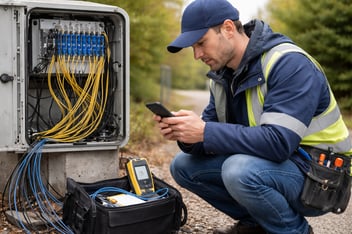

A fiber install goes off track. The technician arrives, realizes the job requires splicing expertise they don't have, and drives away. The subscriber waits another week. The operator eats a truck roll. This scenario plays out daily in fiber operations—not because dispatchers aren't trying, but because their tools can't see the full picture.
Skills-based technician dispatch changes that equation. Instead of assigning jobs based on who's closest or who's next in queue, AEX Field Service matches work orders to technicians based on certifications, experience, and equipment—so the right person shows up the first time.
This guide covers how skills-based dispatch works for fiber and broadband teams, what capabilities matter when evaluating field service management tools, and how to build a dispatch operation that scales without proportionally scaling your headcount.
Key Takeaways: Skills-Based Technician Dispatch for Fiber Teams
- Skills-based dispatch matches technicians to jobs using certifications, experience, and equipment rather than proximity alone.
- First-time fix rates improve when job requirements align with technician qualifications before the truck leaves.
- AEX Field Service enables skills-based assignment connected directly to OSS/BSS workflows for fiber operators.
- Route optimization combined with skills matching increases daily job capacity without adding headcount.
- Execution data captured during installation flows into billing and provisioning systems automatically.
What Is Skills-Based Technician Dispatch?
Skills-based technician dispatch is a scheduling approach that assigns field jobs to technicians based on their specific qualifications, certifications, and capabilities. Rather than routing the nearest available technician to every job, the dispatch system evaluates what each work order requires and matches it to a technician who can actually complete it.
For fiber operators, this means considering factors like splicing certifications, ONT installation experience, aerial versus underground expertise, and whether the technician has the right test equipment. The goal is simple: reduce repeat visits by sending someone qualified to finish the job on the first trip.
How Skills-Based Dispatch Differs from Traditional Dispatch
Traditional dispatch methods prioritize two factors: availability and proximity. The system finds the closest technician who isn't booked and sends them the job. This works when every job is roughly similar and every technician can handle anything.
In fiber operations, that assumption breaks down fast. A residential ONT swap requires different skills than a multi-dwelling unit installation. Troubleshooting a signal loss issue demands different expertise than running new drops. When dispatch systems can't differentiate, you end up with technicians arriving at jobs they can't complete.
Skills-based dispatch adds a third layer: capability matching. The system checks job requirements against technician profiles before making an assignment. Proximity and availability still matter, but only among technicians who can actually do the work.
Why Skills-Based Dispatch Matters for Fiber Operations
The economics of fiber deployment put pressure on field operations from day one. Capital investment goes in upfront. Subscriber uptake follows over three to four years. Anything that accelerates installations and reduces operational drag directly affects the return timeline.
Skills-based dispatch addresses several operational problems that compound as fiber operators scale.
Reducing Repeat Truck Rolls
A repeat truck roll costs more than double a single visit. You pay the technician travel time twice, burn fuel twice, and delay subscriber activation. Worse, you create a negative subscriber experience before service even starts.
When dispatch matches job requirements to technician skills, first-time fix rates go up. The technician shows up with the right certifications and the right equipment. They complete the job on the first visit.
Protecting Technician Capacity
Fiber operators don't have unlimited field capacity. You're working with a finite crew, and every wasted trip reduces the jobs that crew can complete in a day. Skills-based dispatch protects capacity by ensuring technicians spend time on jobs they can finish, not jobs they have to hand off.
This becomes critical during peak installation periods. When you're trying to hit passings targets and subscriber activation deadlines, every job that goes smoothly compounds. Every failed visit creates downstream delays.
Enabling Contract Crew Integration
Most growing fiber operators use a mix of in-house technicians and contract crews. That mix creates a skills management challenge. Your in-house team might have deep fiber experience. Your contract crews might specialize in specific task types.
Skills-based dispatch lets you encode those differences into the system. When a job comes in, dispatch assigns it based on who can do it—not whether they're on payroll or contract. That flexibility matters when you're scaling fast.
Core Capabilities of Skills-Based Dispatch Systems
Not every scheduling tool handles skills-based assignment the same way. When evaluating field service management tools for fiber operations, look for these specific capabilities.
Technician Skill Profiles
The system needs a structured way to define what each technician can do. That includes certifications like fiber splicing, safety training, or manufacturer-specific qualifications. It also includes experience levels—a technician might be certified for aerial work but only have six months of field time.
Good skill profiles also track equipment assignments. If a technician has an OTDR in their truck, they can handle certain test tasks. If they don't, those jobs need to go elsewhere.
Job Requirement Tagging
Skills-based dispatch only works if work orders carry requirement data. When an order comes in, the system needs to know: what type of job is this? What certifications does it require? What equipment does the technician need?
This tagging can happen automatically based on job type or service address characteristics. An MDU installation might automatically require a technician with multi-unit experience. A new construction address might require aerial certification.
Matching Logic with Fallback Rules
The dispatch engine needs to match job requirements against technician profiles and find the right fit. But it also needs fallback logic for situations where no perfect match exists.
Maybe the only available technician lacks one certification but has extensive experience. The system should flag that situation rather than simply rejecting the assignment. Operators can then decide whether to override, reschedule, or escalate.
Real-Time Visibility into Field Status
Skills-based dispatch depends on accurate availability data. If the system thinks a technician is finishing up when they're actually stuck at a complex job, assignments go to the wrong person.
AEX Field Service gives dispatchers real-time visibility into technician locations, job status, and completion progress. That visibility feeds directly into assignment decisions.
Integration with Work Order Systems
Dispatch doesn't happen in isolation. Work orders flow from OSS/BSS systems, CRM platforms, and customer service teams. The dispatch system needs to pull requirement data from those sources and push assignment updates back.
Disconnected dispatch creates manual reconciliation work. If dispatchers are copying job details between systems or re-entering technician assignments, errors multiply and visibility suffers.
How to Build a Skills Taxonomy for Fiber Field Teams
Skills-based dispatch starts with defining what skills matter for your operation. This isn't a one-time exercise—your taxonomy should evolve as your network grows and job types change.
Start with Job Type Analysis
List every type of field job your operation handles. For most fiber operators, that includes new installations, service calls, maintenance work, and construction-related tasks. Each category breaks down into variants with different skill requirements.
A residential installation might break down into: standard ONT install, aerial drop, underground drop, MDU riser work, and inside wiring. Each variant might require different skills or equipment.
Map Certifications to Job Requirements
Once you know your job types, identify what certifications or qualifications each requires. Some will be formal: OSHA safety certifications, manufacturer training completions, or state licensing requirements.
Others might be internal designations. You might have a "complex troubleshooting" tier that technicians earn after demonstrating proficiency on difficult service calls. Those internal skills matter just as much as external certifications.
Define Experience Tiers
Certifications tell you what a technician is qualified to do. Experience tells you how reliably they'll do it. A technician might have a splicing certification but limited field experience applying it.
Create experience tiers that dispatch can reference. A Tier 1 technician might handle standard residential installs. A Tier 2 technician takes on MDU work and complex troubleshooting. A Tier 3 technician leads construction projects and trains newer crew members.
Track Equipment Assignments
Skills aren't just about what technicians know—they're also about what they carry. A technician without an OTDR can't run certain fiber tests. A technician without a fusion splicer can't complete splicing jobs.
Track which equipment is assigned to which vehicle. When dispatch matches a job requiring specific tools, the system filters for technicians who actually have those tools available.
Implementing Skills-Based Dispatch: Step by Step
Moving from proximity-based dispatch to skills-based dispatch requires planning. Here's how fiber operators typically approach the transition.
Step 1: Audit Your Current Dispatch Process
Before changing anything, document how dispatch works today. Where do work orders originate? How do they reach dispatchers? What criteria do dispatchers use when making assignments?
Look at your repeat visit data. Which job types generate the most return trips? Which skill gaps cause the most rescheduling? This analysis points to where skills-based dispatch will have the biggest impact.
Step 2: Build Your Skills Database
Using the taxonomy you developed, create a skills database for your field team. Record certifications, experience levels, and equipment assignments for every technician.
This step takes time, especially for larger teams. You might need to verify certifications, update expired training records, and confirm equipment inventories. The accuracy of your skills data determines how well dispatch works.
Step 3: Tag Work Order Requirements
Update your work order templates to capture skill requirements. When a job is created, the system should automatically tag it based on job type, location characteristics, or service details.
For some operators, this means updating integrations with OSS/BSS platforms. Work orders created from service qualification or provisioning workflows should carry requirement data forward into dispatch.
Step 4: Configure Matching Rules
Set up the logic that connects job requirements to technician skills. Define which skills are mandatory versus preferred. Establish fallback behavior for situations where no perfect match exists.
Test the rules against historical work orders. Would the system have assigned the same technicians? Where would it have made different choices?
Step 5: Train Your Dispatch Team
Dispatchers need to understand how skills-based assignment changes their workflow. They'll have new visibility into why certain technicians are recommended. They'll need to know when to override the system and when to trust it.
The goal isn't to remove dispatcher judgment—it's to give dispatchers better information so their judgment produces better outcomes.
Step 6: Monitor and Refine
After go-live, track key metrics: first-time fix rates, repeat visits, technician utilization, and customer satisfaction. Look for patterns in system overrides—frequent overrides on certain job types might indicate your skills taxonomy needs adjustment.
Skills-based dispatch improves over time as you refine skill definitions and matching rules based on actual field results.
Connecting Skills-Based Dispatch to OSS/BSS Workflows
Dispatch doesn't exist in a vacuum. For fiber operators, it's one stage in a longer workflow that starts with a customer order and ends with billing. When dispatch is disconnected from those other stages, operators lose visibility and create manual handoffs.
Work Orders That Reflect Network Context
When a subscriber orders service, the OSS/BSS system knows details about their address: what network equipment serves that location, what speed tiers are available, what installation type applies. That context should flow into the work order.
If the address requires a specific ONT model, the work order should say so. If the network configuration is non-standard, the technician should know before arriving. AEX connects service qualification data directly to work orders, so field teams see the full network context.
Execution Data Flowing Back to OSS/BSS
When the technician completes the job, what happens next? In disconnected systems, someone manually enters completion data into the OSS platform. They update the subscriber record. They trigger billing.
With integrated systems, execution data captured during the installation—serial numbers, test results, photos, completion timestamps—flows directly into OSS/BSS workflows. Provisioning activates automatically. Billing triggers based on verified completion. No manual reconciliation required.
Closing the Loop on Failed Visits
When a job can't be completed, that information needs to propagate. If the technician arrived but the subscriber wasn't home, dispatch needs to know for rescheduling. If the job required skills the technician lacked, the skills taxonomy might need updating.
Integrated dispatch captures these outcomes and routes them appropriately. Rescheduling happens from the same system. Skill gaps surface in reporting. Nothing falls through the cracks.
Measuring the Impact of Skills-Based Dispatch
How do you know if skills-based dispatch is working? Track these metrics to quantify the operational impact.
First-Time Fix Rate
First-time fix rate measures the percentage of jobs completed on the initial visit. For fiber operators, this directly correlates with truck roll costs and subscriber activation speed.
After implementing skills-based dispatch, first-time fix rates typically improve in the first quarter. Track the rate by job type to identify where matching has the biggest impact.
Repeat Visit Percentage
The inverse of first-time fix rate—what percentage of jobs require a return trip? Drill down into the reasons: was it a scheduling issue, a skill mismatch, missing equipment, or a subscriber-side problem?
Repeat visits attributed to skill mismatches should drop significantly with skills-based dispatch. If they don't, your skills taxonomy or matching rules need adjustment.
Jobs per Technician per Day
When technicians finish jobs on the first visit and don't get assigned work they can't complete, daily capacity goes up. Track jobs completed per technician per day as a utilization metric.
This metric also reveals training opportunities. If certain technicians consistently complete fewer jobs, dig into why. Do they need additional skills? Are they getting assigned more complex work?
Average Time to Complete by Job Type
Skills matching should reduce completion time because qualified technicians work faster. Track average time from arrival to completion by job type. Look for improvements after implementing skills-based assignment.
Dispatch Override Rate
When dispatchers override system recommendations, that's a signal. Occasional overrides reflect legitimate judgment calls. Frequent overrides on certain job types suggest the matching rules don't fit operational reality.
Track override rates and investigate patterns. Use what you learn to refine the skills taxonomy and matching logic.
Common Challenges in Skills-Based Dispatch Adoption
Operators moving to skills-based dispatch often encounter similar challenges. Knowing what to expect helps you plan around them.
Incomplete Skills Data
Skills-based dispatch is only as good as your skills database. If technician profiles are incomplete or out of date, the system makes poor assignments. Building and maintaining accurate skills data takes ongoing effort.
Assign responsibility for skills data maintenance. Establish processes for updating certifications when technicians complete training. Audit the database periodically for accuracy.
Resistance from Dispatchers
Experienced dispatchers may feel the system undermines their expertise. They know their technicians and have developed intuition about who handles what.
Position skills-based dispatch as a tool that enhances dispatcher capability, not replaces it. The system handles data processing so dispatchers can focus on judgment calls and exceptions. Involve dispatchers in building the skills taxonomy—their field knowledge is valuable.
Skills Gaps Becoming Visible
When you map skills systematically, gaps become obvious. You might discover that only two technicians can handle a common job type, creating a bottleneck. That visibility is valuable but can feel uncomfortable.
Use skills data to drive training investments. If certain skills are under-represented, prioritize those certifications. Skills-based dispatch doesn't just optimize current capacity—it reveals where to build future capacity.
Over-Engineering the Taxonomy
It's tempting to create extremely granular skill definitions. But overly complex taxonomies become hard to maintain and may not improve matching accuracy.
Start with a practical taxonomy that captures meaningful differences. You can add granularity later based on operational data. The goal is better assignments, not perfect categorization.
Skills-Based Dispatch in Practice: What Changes Operationally
When skills-based dispatch works well, the changes ripple through daily operations. Here's what operators typically experience.
Dispatchers Work Differently
Instead of scanning availability and estimating drive times, dispatchers see qualified technicians ranked by fit. They spend less time on routine assignments and more time on exceptions that need judgment.
The system handles the matching logic. Dispatchers handle the situations where rules don't apply cleanly or circumstances require flexibility.
Technicians Get Jobs They Can Complete
For field crews, skills-based dispatch means showing up prepared. The job they're assigned matches what they can do. The work order includes relevant details. They have the equipment they need.
Technician satisfaction often improves because frustration decreases. Fewer wasted trips. Fewer jobs handed off mid-visit. More days where the work makes sense.
Managers Get Better Visibility
At the management level, skills-based dispatch creates what operators describe as a manage-by-exception model. When most assignments are handled automatically, managers focus attention on patterns and problems.
Which job types generate the most issues? Which skill gaps constrain capacity? Where should training investment go? The data to answer those questions comes from the dispatch system.
Scaling Becomes More Predictable
For growing fiber operators, the real benefit of skills-based dispatch is predictability. When you can model what skills your jobs require and what skills your team has, you can plan capacity more accurately.
Adding technicians with specific skills becomes a calculated decision rather than a guess. Bringing on contract crews with particular capabilities fills known gaps. Growth doesn't mean chaos—it means controlled expansion based on real operational data.
How AEX Field Service Supports Skills-Based Dispatch for Fiber Operators
AEX Field Service is built for the operational realities fiber operators face. Skills-based dispatch is one capability among many—but it connects directly to the broader challenge of running field operations at scale.
Skill-Based Assignment Connected to Scheduling
AEX Field Service maintains technician profiles including certifications, experience levels, and equipment assignments. When work orders arrive, the system matches requirements to profiles automatically.
Dispatchers see recommended assignments with explanations. Override capability exists for situations requiring judgment. The system learns from patterns over time.
Work Orders with Full Context
Because AEX integrates field service with OSS/BSS workflows, work orders carry network context forward. Technicians see not just what to install but what network equipment serves the location, what speed tier the subscriber ordered, and what configuration applies.
That context reduces errors and speeds completion. The technician doesn't need to look up details in a separate system—it's all in the work order.
Mobile Workflows with Offline Capability
Field technicians access job details, checklists, and documentation requirements through mobile tools that work even in areas with poor connectivity. When they complete a job, execution data syncs automatically when connection returns.
This matters for fiber operations where technicians often work in rural areas or network dead spots. Dispatch assignments and completion data stay current regardless of coverage.
Execution Data That Flows to Billing
When a technician marks a job complete in AEX Field Service, that completion data flows directly into AEX OSS/BSS. Provisioning triggers. Customer records update. Billing reflects what was actually delivered.
No manual entry. No reconciliation spreadsheets. The execution data captured during the installation becomes the system of record for what happened in the field.
Building a Dispatch Operation That Scales
Skills-based dispatch is one piece of building field operations that scale with your subscriber growth. The broader challenge is connecting dispatch to everything else: order management, provisioning, billing, and subscriber communication.
When those connections exist, you stop scaling headcount proportionally with subscribers. Your systems handle routine work automatically. Your people focus on exceptions, improvements, and growth.
For fiber operators moving from thousands to tens of thousands of subscribers, that operational foundation determines whether scale becomes a strength or a source of chaos.
Want to see how skills-based dispatch fits into a unified fiber operations platform? Request an AEX demo to explore how Field Squared connects scheduling, execution, and billing workflows for fiber operators.
FAQs About Skills-Based Technician Dispatch for Fiber Teams
What is skills-based technician dispatch?
Skills-based technician dispatch assigns field jobs based on technician qualifications rather than just proximity or availability. The dispatch system matches job requirements—certifications, experience, equipment—to technician profiles to find the right person for each job.
This approach reduces repeat visits because technicians arrive prepared to complete the work on the first trip.
How does skills-based dispatch improve first-time fix rates?
First-time fix rates improve because the technician assigned to a job has the skills required to complete it. AEX Field Service matches work order requirements to technician certifications and experience before making assignments.
When technicians have the right qualifications and equipment, they finish jobs without needing return trips.
What skills should fiber operators track for dispatching?
Fiber operators typically track splicing certifications, aerial and underground installation qualifications, manufacturer-specific training, safety certifications, and experience tiers. Equipment assignments matter too—a technician needs the right test equipment to complete certain jobs.
The specific skills depend on your job types and network characteristics.
Can skills-based dispatch work with contract crews?
Yes. Skills-based dispatch is especially valuable when using a mix of in-house and contract technicians. AEX Field Service tracks skills across all crew types, so dispatch can assign jobs based on capability regardless of employment relationship.
This flexibility supports rapid scaling during peak installation periods.
How does skills-based dispatch connect to OSS/BSS systems?
In an integrated platform like AEX, work orders flow from OSS/BSS systems with network context attached. Skills-based dispatch assigns the work, and completion data flows back automatically to trigger provisioning and billing.
This connection eliminates manual data entry between field operations and back-office systems.
What metrics should I track after implementing skills-based dispatch?
Track first-time fix rate, repeat visit percentage, jobs per technician per day, and average completion time by job type. Also monitor dispatch override rates—frequent overrides suggest your skills taxonomy or matching rules need refinement.
These metrics show whether skills-based assignment is improving operational efficiency.