Every fiber operator I talk to is assembling the same six-piece puzzle. Coverage planning from one vendor. Equipment from another. A software platform from a third. Field service from a fourth. A NOC contract from a fifth. A subscriber helpdesk from a sixth. Each piece works fine on its own. The problem shows up at the seams: the order that closes in one system and sits for three days before anyone schedules the install, the completed job that doesn't trigger provisioning, the service that goes live without triggering an invoice.
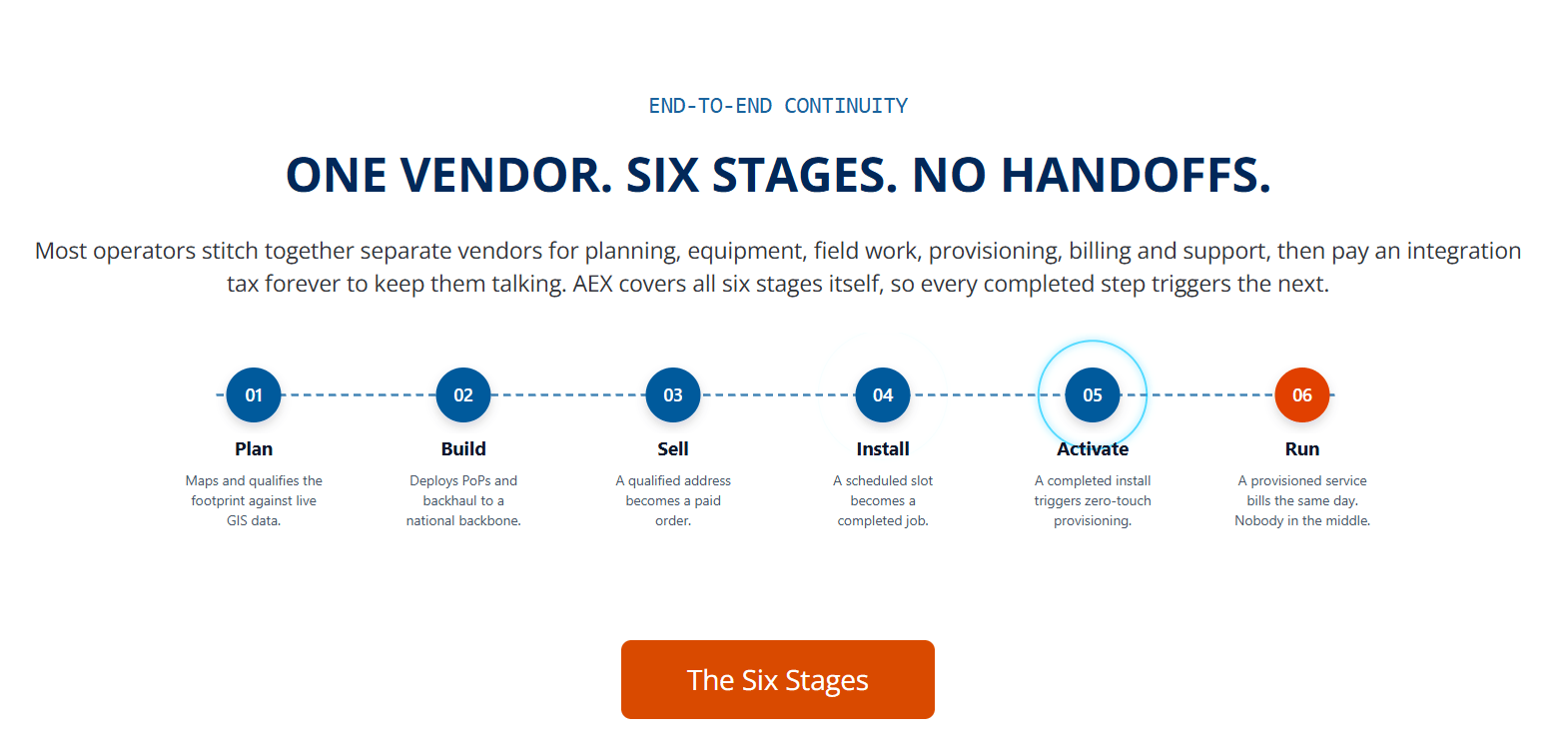
A fiber network has a life. It starts with a coverage map and ends with a subscriber calling support years later. Most vendors in this industry sell you one stage of that life. A few sell you two. Here's what all six actually involve, and why owning them together, not just naming them together, is the part that matters. (For the short version, see how a fiber network actually runs on AEX.)
Plan: knowing where to build before you spend anything
Planning starts before a single piece of equipment is ordered. It means GIS and premise management, serviceable location mapping down to the individual address, and classifying which areas are greenfield builds versus which can be reached by extending existing plant. Get this wrong and you find out during construction, which is the most expensive place to find out. Get it right and every stage after it is working from the same accurate map instead of six different spreadsheets.
Build: turning a plan into physical infrastructure
Build is equipment procurement (AEX is an authorised Nokia reseller, alongside Calix, Zhone, Ubiquiti, and other vendors), staging, installation, configuration, and commissioning, down to street cabinet deployment and the backbone and middle-mile connectivity that gets a new PoP talking to the rest of the network. AEX's engineering teams take equipment from a warehouse shelf to a verified, live PoP, and today that's more than 300 PoPs across a 14-state footprint. AEX Network Services is the team behind that build-out, and the operations after it goes live.
Sell: capturing an order without losing it to a queue
Sell is address qualification, order capture across online, door-to-door, and phone channels, payment at the point of sale, and campaign management, usually through a white-label subscriber app, part of AEX Software. This is where the subscriber relationship actually starts, and it's also the first place the six stages either connect or don't. A closed order schedules the field work. Nobody in the middle. If that handoff is manual, every order waits in a queue for someone to notice it.
Install: getting a technician to the address with everything they need
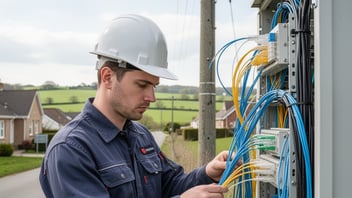
Install is smart scheduling and dispatch, route and skills optimisation, customer self-scheduling, and an offline-first mobile app the technician actually uses in the field, backed by smart forms and asset management so nothing gets tracked on paper. This is AEX Field Service doing the physical work. Operators running install this way sustain three to five completed installs per technician per day, a 2 to 3x improvement over operators still coordinating this manually.
Activate: the difference between a finished job and a live subscriber
A completed installation provisions the device. Nobody in the middle. Activate is zero-touch provisioning across ten OEM ecosystems (Nokia, Huawei, ZTE, Zhone, Calix, Ubiquiti, Radisys and Kontron on Nokia, CData, and Eero, plus any TR-069 device through the AEX ACS), with connectivity verified before the technician leaves the address. A provisioned service bills the same day. Nobody in the middle. That's AEX Software closing the loop between a finished job and a billing subscriber, and it's the step that gets operators to 60%+ faster time to invoice.
Run: what happens for years after the truck leaves
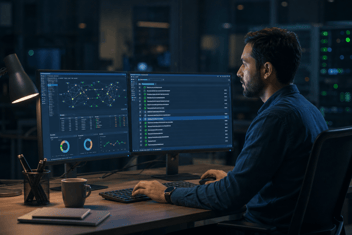
Run is real-time monitoring wired directly to ticketing and dispatch, a 24/7/365 NOC staffed by Nokia-certified engineers with direct OEM escalation, Tier-2/3 support, and a white-label helpdesk answering subscriber calls under the operator's own brand, all part of AEX Network Services. A network event becomes a dispatched job. Nobody in the middle. AI-assisted troubleshooting is live in this stage today, not as a headline feature but as the thing that lets a NOC catch a fault before a subscriber notices, which matters more as networks scale faster than headcount does.
Why splitting these six stages across vendors costs more than it looks like
Buying each of these stages from a different vendor means someone, usually the operator's own team, has to be the integration layer between them. That's not a one-time cost. It's a permanent tax on every order, every install, every fault, paid in staff hours that never show up on a vendor's price sheet.
We built AEX because we hit this wall ourselves. AEX started in South Africa in 2000, rolling out fiber to the home at national scale with no vendor-agnostic OSS/BSS platform on the market that could keep up. So we built our own, because we needed it to run our own network, not to sell it. We did not enter this market as a software vendor, and that history still shapes how the platform works today.
Proof: Ripple Fiber didn't integrate six vendors. It skipped needing to.
Ripple Fiber started as a 13-person team with no NOC, no helpdesk, no billing platform, no field operations, and no carrier network of its own. It's now a 10-state operator passing more than 250,000 homes, doubling both passings and customers year on year, running its full operation on AEX. It didn't get there by integrating six vendors well. It got there by not having six vendors to integrate.
Why this matters more this month than last month
Illinois became the last state to get its BEAD proposal approved by NTIA at the end of August. All 56 states and territories are now cleared to build, which means a wave of operators, many of them brand new to running a network at all, are about to go from planning to construction at the same time. That's exactly the profile AEX's BEAD Virtual ISP Platform is built for: connectivity, a 24/7/365 NOC, a white-label helpdesk, and equipment procurement, available now, so a grantee doesn't have to stand up an operations organization from scratch to hit a build deadline.
The site says it plainly now
We rebuilt aexinc.com around this idea because it's the truest thing we can say about the company, and we'd never actually said it in one place before. Not three businesses that share a logo. One company that covers the full life of a network, six stages, no seams between them.
Frequently Asked Questions
What are the six stages of a fiber network's lifecycle?
Plan, Build, Sell, Install, Activate, and Run. Plan is coverage mapping and premise management. Build is equipment procurement and physical construction through to a commissioned PoP. Sell is order capture and payment. Install is scheduling, dispatch, and field execution. Activate is zero-touch provisioning and same-day billing. Run is monitoring, NOC operations, and subscriber support.
Why do most vendors only cover part of the fiber network lifecycle?
Most OSS/BSS, field service, and network infrastructure vendors grew up solving one piece of the problem well. Covering all six stages requires software, physical field execution, and network operations under one roof, which is a different kind of company to build than a single-purpose software vendor.
What actually happens during the Activate stage?
Activate covers zero-touch provisioning across ten OEM ecosystems, with connectivity verified before the technician leaves the address, followed by same-day billing. It's the stage that determines whether a finished installation becomes a paying, active subscriber the same day or days later.
What is the BEAD Virtual ISP Platform?
It's AEX's packaged offer for BEAD-funded operators who have construction funding and a mandate to build but not the operational infrastructure to run a network. It includes connectivity, a 24/7/365 NOC, a white-label subscriber helpdesk, and equipment procurement, available now.
How much faster is billing on AEX?
Operators on AEX see time to invoice improve by 60% or more, because a provisioned service triggers billing automatically instead of waiting on a manual step.