There's a moment that happens on fiber installations that nobody talks about enough.
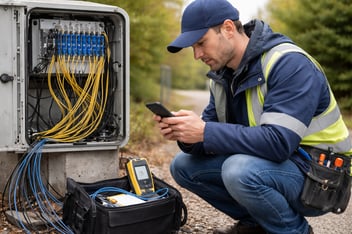
The technician finishes the job. Equipment is mounted, cable is routed, everything checks out. They pull up the work order, mark it complete, and then... nothing. The customer is standing there expecting to be live, and the tech has to tell them someone back at the office will handle activation shortly.
That gap, between job completion and service going live, is where installation capacity quietly gets destroyed.
I've seen operators lose hours of field time per day to this one problem. The tech drives to the next job. Back-office staff trigger activation manually. Someone has to follow up if it doesn't go through. And if the tech needs to go back because activation failed, you've just turned one truck roll into two.
This is a provisioning problem, but it shows up as a scheduling problem, a customer experience problem, and an ARPU problem all at once.
So let's talk about what zero touch provisioning actually means in a fiber operation, and why it only works when it's connected directly to your field workflow.
Zero touch provisioning is not just fast activation
The term gets used loosely. Most vendors will tell you they support zero touch provisioning. What they mean varies enormously.
At its most basic, zero touch provisioning means the ONT or CPE device is configured automatically rather than requiring manual input from a back-office engineer. That's a meaningful improvement over a fully manual process, but it's not the full picture.
The real question is: what triggers provisioning?
In a lot of platforms, activation is triggered by a back-office action. The field tech completes the job, that completion either syncs to the platform or gets manually entered, and then a separate team initiates provisioning. Those are two separate steps with a human in the middle.
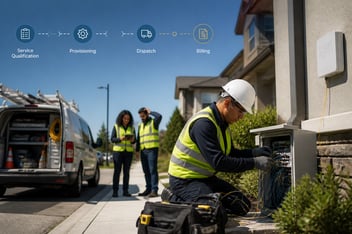
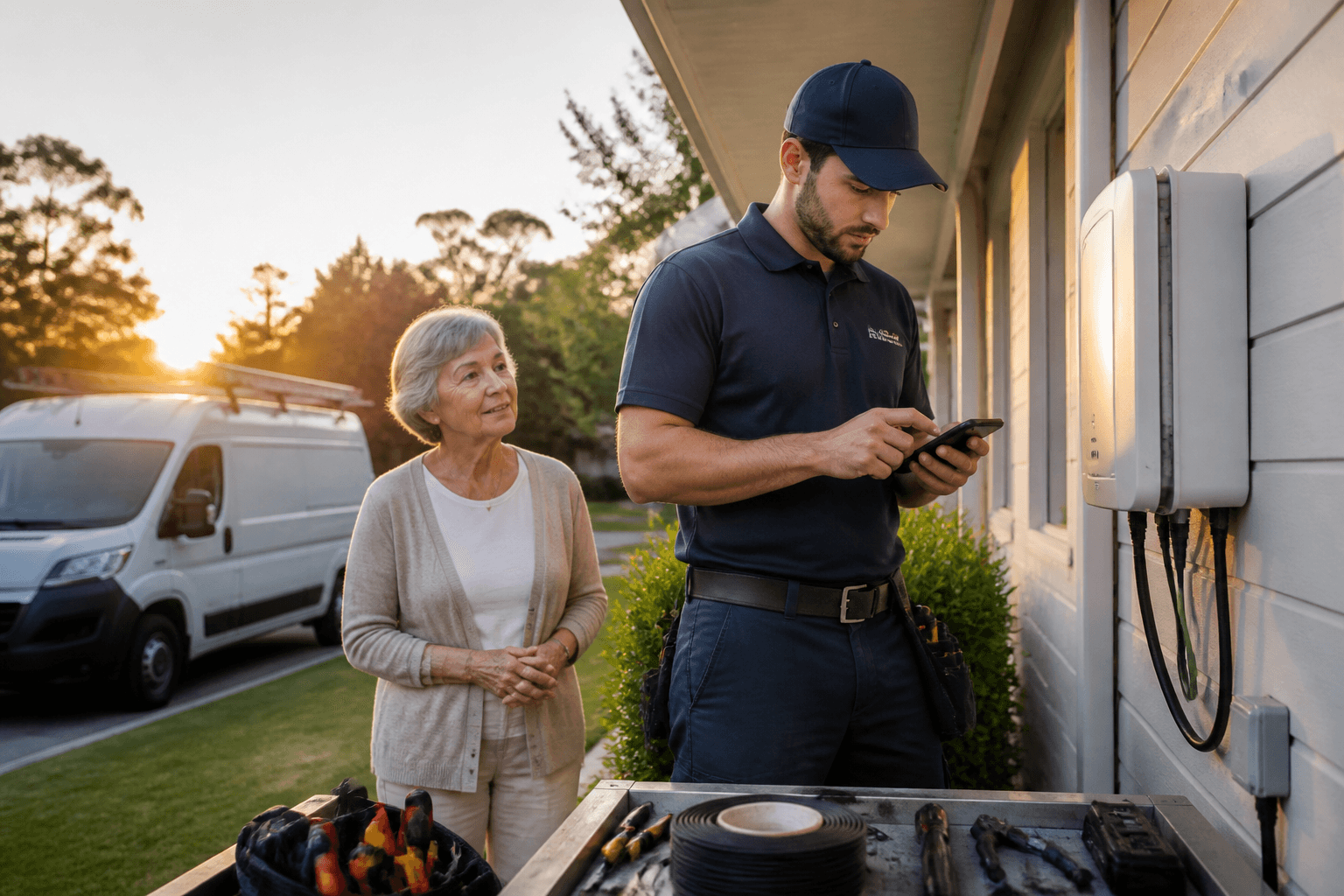
In a genuinely connected platform, job completion in the field triggers provisioning automatically, in real time, while the tech is still on site. The device configures itself, the connection is verified, and the tech confirms the customer is live before they leave. One visit. No follow-up call. Billing starts the moment the job closes.
That's the difference between zero touch provisioning as a feature and zero touch provisioning as an operational outcome.
Why the gap exists in most fiber operations
The reason this gap is so common is that OSS/BSS platforms and field service management tools are often built separately and connected later. The billing and subscriber management side handles provisioning. The field side handles scheduling and dispatch. They talk to each other through an integration, or sometimes just through manual process.
That architecture makes sense if you're building two products independently. It creates real problems the moment a technician needs to close a job and have the customer live before the van leaves the driveway.
When provisioning lives in the OSS/BSS and field service lives in a separate module or tool, the trigger has to cross a system boundary. Sometimes that works cleanly. More often, there's a delay, a sync failure, or a manual step that was supposed to be automated but isn't in practice.
Operators don't always realize this is the problem because the issue shows up in customer complaints about delayed activation, not in a system log that says "provisioning trigger failed."
What same-visit activation actually requires
Same-visit activation — where the customer is live before the tech leaves — is the goal most operators are working toward. It reduces repeat visits, improves NPS, and lets your techs run more jobs per day because they're not returning to finish what should have been done the first time.
To get there consistently, you need a few things working together.
First, the tech needs to be able to initiate or confirm provisioning from their mobile device at the job site. Not log a completion that kicks off a back-office process later. Actually initiate it, or confirm that it fired automatically when the job closed.
Second, the platform needs to support multi-OEM provisioning natively. If your network runs Calix in one area, Adtran in another, and Nokia equipment on a recent deployment, your provisioning engine needs to handle all of them without a different workflow for each vendor. The moment a tech has to know which OEM is at the site and follow a different process accordingly, you've reintroduced complexity that slows everything down.
Third, automated service testing needs to happen on-site. The tech should be able to verify bandwidth and connectivity before the job is marked complete. Not assume it worked. Verify it. That's what turns "we completed the install" into "the customer is live."
When these three things work together — mobile-initiated or auto-triggered provisioning, multi-OEM support, and on-site service verification — same-visit activation stops being an aspiration and starts being a standard outcome.
The revenue clock and why it matters more than you think
There's a billing dimension to this that doesn't get discussed enough.
When activation is manual and delayed, billing is also delayed. In most platforms, the revenue clock starts when provisioning completes. If there's a two-hour gap between job completion and activation because someone in the back office is handling it, that's two hours of unbilled service per installation. Across a team of ten technicians running four installs each per day, that adds up fast.
More importantly, delayed activation means delayed confidence. Customers who aren't live when the tech leaves are more likely to call support, less likely to trust the service from the start, and more likely to become churn risks before they've even received their first bill.
The operators who have closed this gap consistently run more installs per tech per day, carry lower repeat-visit rates, and see better early-tenure NPS scores. The provisioning connection isn't a technical nicety. It directly determines how many customers you can activate and how well they stay.
What to look for when evaluating this in a platform
If you're assessing how well a platform handles this, skip the demo narrative and ask specific questions.
-
Ask what triggers provisioning. Is it a back-office action, a workflow rule, or a field completion event? Get them to show you the data flow, not just the end result on screen.
-
Ask whether provisioning fires while the tech is still on site, or after they leave. The answer tells you a lot about how the platform was architected.
-
Ask which OEM devices are supported natively and what the provisioning workflow looks like for each. If the answer is a list of integrations rather than native support, you're looking at a dependency that can break.
-
Ask whether service testing is built into the mobile job workflow or whether it's a separate step the tech has to initiate manually.
-
And ask what happens when provisioning fails. How does the tech find out? Can they retry from the mobile app? Or does it go to a back-office queue that the tech has no visibility into?
The answers to those questions will tell you more about real operational capability than any demo environment.
For fiber operators looking to run more installs per day with fewer repeat visits, the AEX platform connects field job completion directly to provisioning and billing in a single native workflow — across Calix, Adtran, Nokia, Ciena, and other major OEMs. The Field Service Management module handles scheduling, dispatch, mobile work orders, and on-site service verification in the same platform where provisioning fires.
Frequently asked questions
What is zero touch provisioning for fiber operators?
Zero touch provisioning means a fiber customer's ONT or CPE device is configured automatically when service is activated, without manual input from a back-office engineer. For the full technical picture, including ONT and RADIUS requirements, see What Is Zero-Touch Provisioning in Fiber Broadband?
Why does provisioning speed matter for fiber installation capacity?
When provisioning is delayed or requires a manual back-office step, technicians often have to return to complete activation on a second visit. This reduces the number of installs each tech can complete per day and increases operational cost. Automating provisioning from job completion directly improves throughput and reduces repeat truck rolls.
What does same-visit activation mean?
Same-visit activation means the customer's fiber service is live and verified before the installation technician leaves the property. It requires provisioning to fire automatically from field job completion, on-site service testing to confirm bandwidth and connectivity, and multi-OEM provisioning support so the workflow is consistent regardless of the equipment installed.
What is multi-OEM provisioning and why does it matter?
Multi-OEM provisioning means the platform can activate and configure network equipment from multiple hardware vendors — such as Calix, Adtran, Nokia, and Ciena — without requiring a different provisioning workflow for each one. For fiber operators running equipment from more than one vendor, native multi-OEM support eliminates manual steps and reduces the risk of activation errors in the field.
How does provisioning connect to billing?
In most platforms, the revenue clock starts when provisioning completes. If activation is delayed by a manual back-office step, billing is also delayed. When provisioning fires automatically from field job completion, billing starts at the same moment the customer goes live, eliminating the gap between service delivery and revenue recognition.