
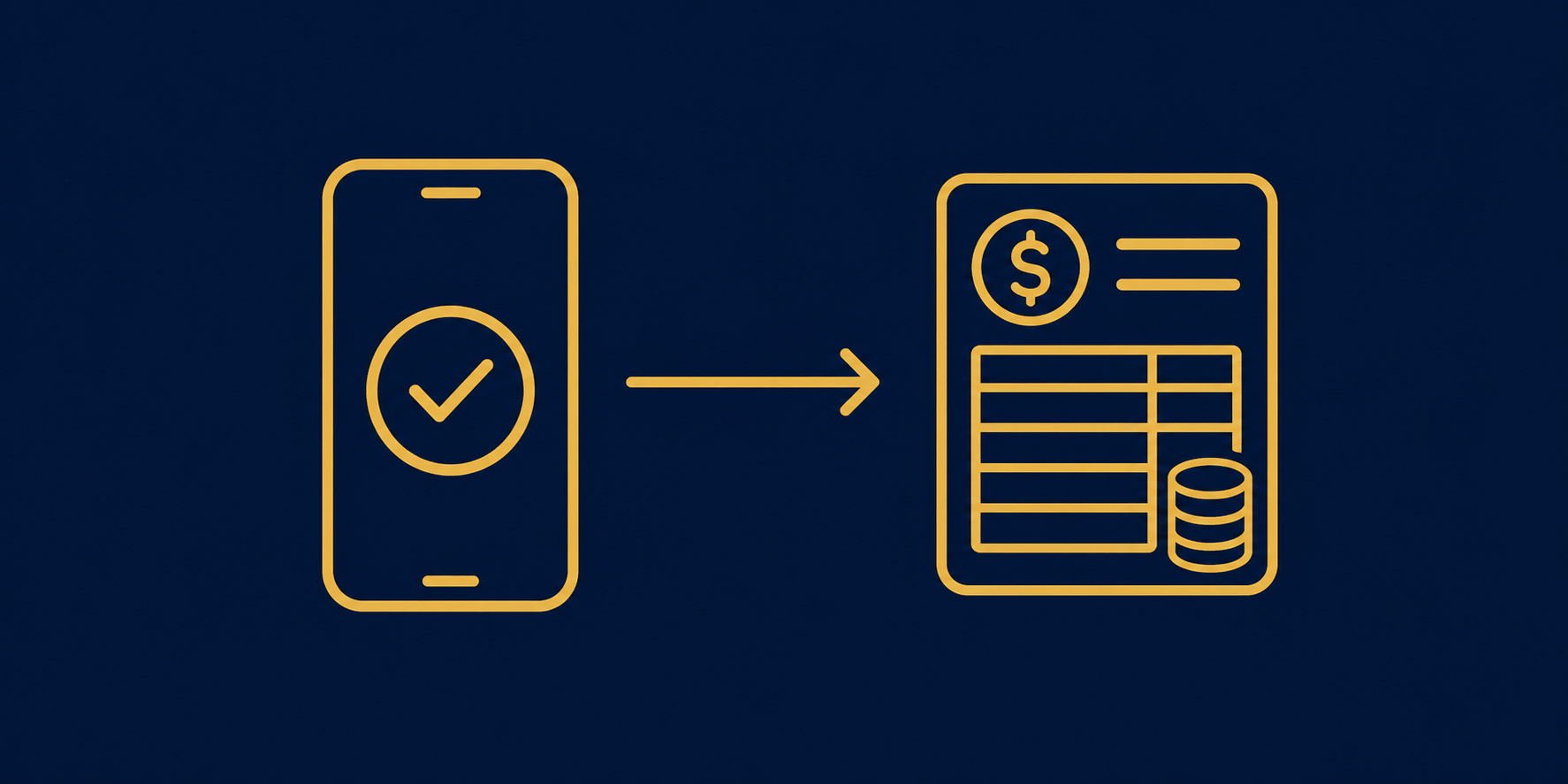
A technician marks an install complete. The network shows the ONT online. But billing doesn't start for another three days because someone has to manually verify the work order, reconcile it against the provisioning record, and key the activation into a different system. For fiber operators scaling beyond a few thousand subscribers, this gap between provisioning and billing is one of the most expensive inefficiencies hiding in plain sight.
This guide breaks down why these disconnects happen, what they cost you operationally and financially, and how to close them with unified OSS/BSS workflows. AEX Inc gives fiber operators a single platform that connects provisioning, field execution, and billing so completion data flows directly into revenue recognition without manual reconciliation.
If you're running separate systems for provisioning and billing, you already know the symptoms. The root causes and fixes are what most operators need to understand clearly before making architectural decisions.
Key Takeaways
- Provisioning-to-billing disconnects create delays, billing errors, and revenue leakage that compound as your subscriber base grows.
- Manual reconciliation between OSS and BSS systems adds labor costs and introduces human error at the most critical revenue moment.
- Unified workflows eliminate handoffs by routing execution data directly from field completion to billing activation.
- AEX Inc connects provisioning, dispatch, and billing on one platform so completion data triggers invoicing automatically.
- Fixing these gaps requires architectural change, not just process improvements or additional integrations between existing tools.
What Are Provisioning-to-Billing Disconnects in Fiber Operations?
A provisioning-to-billing disconnect happens when the systems that activate a customer's service don't communicate directly with the systems that start billing. In most fiber operations, provisioning lives in the OSS layer. It handles service design, network configuration, and device activation. Billing lives in the BSS layer. It manages customer accounts, invoicing, and revenue recognition.
When these layers operate independently, someone has to bridge them. That bridge is usually manual: a spreadsheet export, a nightly batch file, or an operations team member keying data from one screen into another. Every manual step introduces delay, error potential, and operational drag.
How This Gap Shows Up in Daily Operations
Your provisioning system shows a service is active. Your billing system doesn't reflect that activation until hours or days later. In the meantime, you're delivering service without invoicing for it.
Or the opposite happens: billing starts before the service is truly active because the provisioning status was optimistic. Now you're charging customers for service they're not receiving, which creates disputes, credits, and churn risk.
These disconnects aren't edge cases. For operators running separate OSS and BSS systems, they're daily occurrences that your team has learned to work around rather than solve.
Why Do Separate OSS and BSS Systems Create Revenue Leakage?
Revenue leakage happens when completed work doesn't convert to billable revenue at the right time. In fiber operations, the timing between service activation and billing start date is critical. Every day you deliver service without billing is revenue you don't recover.
The root cause is architectural. Traditional telecom stacks treat OSS and BSS as separate domains with different data models, different vendors, and different update cycles. Integration points between them are brittle and often asynchronous.
The Hidden Costs of Manual Reconciliation
Manual reconciliation doesn't just introduce errors. It requires dedicated labor. Someone has to pull reports from the provisioning system, compare them against billing records, identify discrepancies, and correct them. This work scales linearly with your subscriber base.
At 5,000 subscribers, you might absorb this overhead. At 50,000 subscribers, you're staffing an entire reconciliation function. That's headcount that could be deployed on growth activities instead of catching data gaps between systems.
Delayed Billing Start Dates
When provisioning and billing systems don't share a common trigger, billing start dates slip. A two-day delay across 1,000 activations per month means roughly 2,000 subscriber-days of unbilled service annually. Multiply that by your average monthly revenue per subscriber and you see the financial impact.
This isn't a billing department problem. It's a systems architecture problem. Fixing it with more staff or better processes only masks the underlying structural gap.
What Causes Provisioning and Billing Systems to Fall Out of Sync?
The disconnect between provisioning and billing systems usually traces back to one of three architectural patterns: batch processing, manual handoffs, or mismatched data models.
Batch Processing Delays
Many legacy integrations rely on batch files exchanged between systems on a scheduled basis. Provisioning exports completed activations at end of day. Billing imports them overnight. This means real-time service activation doesn't trigger real-time billing.
If a customer is activated at 9 AM, billing might not start until the following morning. Worse, if the batch job fails or times out, the gap extends until someone notices and intervenes.
Manual Status Updates
In some operations, technicians mark work complete in a field service app. A supervisor reviews and approves. Someone in operations updates the provisioning status. Someone else notifies billing that the service is active. Each handoff adds latency and error potential.
By the time billing starts, three or four people have touched the activation record. Any one of them could introduce a delay or a data error that impacts revenue recognition.
Mismatched Data Models Between OSS and BSS
OSS systems track network-centric data: service IDs, port assignments, device configurations. BSS systems track customer-centric data: account numbers, rate plans, billing cycles. When these data models don't align, integrations require complex translation layers that break when either system changes.
A service ID in your provisioning system might not map cleanly to a billing account. Multiple services might roll up to a single invoice. Address formats might differ. These mismatches create manual work every time an activation flows from OSS to BSS.
What Is the Financial Impact of Fragmented OSS/BSS Workflows?
The financial impact of provisioning-to-billing disconnects shows up in three areas: direct revenue leakage, operational overhead, and customer experience degradation that drives churn.
Direct Revenue Leakage
Revenue leakage occurs when billable events don't trigger invoicing. In fiber operations, this includes activations that aren't billed on time, service changes that aren't reflected in billing, and disconnects that continue billing after service ends.
Industry benchmarks suggest that telecom operators with fragmented systems lose between 1 and 5 percent of revenue to leakage. For a regional fiber operator with $10 million in annual revenue, that's $100,000 to $500,000 walking out the door.
Operational Overhead
Manual reconciliation, error correction, and data cleanup require staff time. This overhead doesn't scale efficiently. As your subscriber base grows, your reconciliation burden grows proportionally. Eventually, you hit a ceiling where you can't process activations fast enough to keep up with growth.
That ceiling forces a choice: hire more operations staff or fix the underlying systems. Hiring delays the structural fix and increases your cost per subscriber served.
Customer Experience and Churn
Billing errors create customer service contacts. Incorrect charges, delayed billing, and disputed invoices all require resolution. Each contact costs you money and erodes customer trust.
Subscribers who experience billing problems in their first 90 days churn at significantly higher rates than those who don't. A billing error on the first invoice can undo the goodwill you built during the sales and installation process.
How Do Traditional OSS/BSS Integrations Fail at Scale?
Traditional integration approaches work at low volumes. Point-to-point APIs, scheduled batch jobs, and middleware layers can handle modest transaction volumes with acceptable latency. But they break down as you scale.
Point-to-Point API Brittleness
Direct API integrations between OSS and BSS systems depend on both systems being available, having compatible data formats, and handling errors gracefully. When one system changes its API, the integration breaks. When transaction volumes spike, the integration queues back up.
You end up with a fragile connection that requires constant maintenance and monitoring. Every system upgrade becomes a risk event for your integration layer.
Middleware Complexity
Enterprise service buses and integration platforms can abstract the complexity of connecting OSS and BSS systems. But they introduce their own complexity: additional infrastructure to manage, additional vendor relationships, and additional points of failure.
The middleware layer also doesn't solve the fundamental data model mismatch. It just moves the translation logic to a different location. You're still reconciling network-centric and customer-centric data models somewhere in your architecture.
Lack of Real-Time Visibility
Batch integrations and queued APIs don't give you real-time visibility into activation status. You can't tell whether a customer is billing-ready until the integration completes. This makes troubleshooting difficult and delays your ability to catch errors before they impact revenue.
Real-time visibility requires a different architectural approach: shared data, unified workflows, and event-driven triggers that fire when field work completes.
What Does a Unified OSS/BSS Workflow Look Like?
A unified workflow connects provisioning and billing through shared data and automated triggers. When a technician completes an installation, that completion event flows directly to billing without manual intervention. The same data that confirms network activation also starts the billing clock.
Shared Data Model Across OSS and BSS Functions
Instead of translating between separate data models, a unified platform uses a common data structure for both operational and business functions. The service record includes both the network configuration details and the billing parameters. No translation required.
This shared model eliminates the reconciliation burden. What the network knows, billing knows. What the technician recorded in the field, the invoice reflects.
Event-Driven Billing Triggers
Unified workflows use events to trigger downstream actions. When an installation is marked complete and validated, that event triggers provisioning, device activation, and billing start in a coordinated sequence. No batch jobs. No manual handoffs.
AEX Inc automates this sequence so that completion data captured during execution in real time flows directly into customer records and billing systems. Orders advance automatically based on dependencies being met, not manual status updates.
Execution Data as the System of Record
In a unified architecture, execution data becomes the authoritative source for downstream processes. What actually happened in the field determines what the network reflects and what the customer is billed. This eliminates disputes over whether service was delivered and creates accountability at every step.
This approach inverts the traditional model where billing follows an expected activation date. Instead, billing follows verified completion, captured during execution in real time by technicians using mobile workflows. To understand how this fits into the broader subscriber lifecycle, see how a fiber operator platform works across all five stages.
How to Identify Provisioning-to-Billing Gaps in Your Current Operations
Before you can fix these gaps, you need to measure them. Most operators don't track the latency between service activation and billing start because it requires correlating data from multiple systems.
Step 1: Map Your Current Activation-to-Billing Flow
Document every step from field completion to first invoice. Identify each system involved, each handoff point, and each manual intervention. Time how long each step takes under normal conditions and during peak periods.
You're looking for latency: how many hours or days pass between the technician marking work complete and billing starting? Where does that latency accumulate?
Step 2: Measure Reconciliation Volume
Track how many activations require manual reconciliation each month. Calculate the labor hours spent on reconciliation, error correction, and billing adjustments. This gives you a baseline cost for your current process.
Also track the failure modes: how many activations fail to flow through to billing automatically? What percentage require human intervention?
Step 3: Calculate Revenue Leakage
Compare your provisioning records against your billing records for a sample period. Identify activations that were delayed in billing, services that were billed incorrectly, and disconnects that continued billing after service ended.
Quantify the revenue impact. This gives you a business case for fixing the underlying systems rather than continuing to manage around them.
What Are the Key Integration Points Between Provisioning and Billing?
If you're working toward a unified workflow, you need to understand where provisioning and billing must connect. These integration points are where disconnects cause the most damage and where unification delivers the most value.
Service Activation Events
The moment a service becomes active is the most critical integration point. This event needs to trigger both network-side actions (port configuration, device provisioning) and business-side actions (billing start, customer notification).
In a disconnected architecture, these happen separately with manual coordination. In a unified architecture, they happen as a coordinated sequence triggered by a single completion event.
Service Modification Events
Upgrades, downgrades, and service changes need to flow from the network layer to the billing layer. If a customer upgrades from 100 Mbps to 1 Gbps, provisioning changes their service profile and billing changes their rate plan. Both need to happen simultaneously.
Disconnects here cause billing errors: customers charged for the old service level after an upgrade, or charged for premium service before it's actually provisioned.
Disconnect and Churn Events
When a customer cancels service, provisioning needs to deactivate the network connection and billing needs to stop invoicing. If these happen out of sequence, you either continue billing after service ends (causing disputes) or stop billing before the customer actually churns (losing revenue).
These events are often handled by different teams using different systems with no automated coordination.
How to Build a Business Case for Unified OSS/BSS Workflows
Fixing provisioning-to-billing disconnects requires investment. You need a clear business case to justify that investment and prioritize it against other operational improvements.
Quantify Current State Costs
Calculate the fully loaded cost of your current reconciliation process: labor hours, error correction, customer service contacts related to billing issues. Add the estimated revenue leakage from delayed billing and missed activations.
This gives you the cost of the status quo. Any solution needs to deliver savings that exceed the cost of implementation and ongoing operation.
Project Efficiency Gains
Estimate how unified workflows would reduce reconciliation labor. If completion data flows directly to billing, how many hours of manual work disappear? What does that free up your operations team to do instead?
AEX Inc customers typically see 60% faster time to invoice by eliminating manual reconciliation between field completion and billing activation. That acceleration directly impacts cash flow and reduces the revenue leakage window.
Model Revenue Recovery
If your current leakage rate is 2% and unified workflows reduce that to 0.5%, model the revenue recovery over one, three, and five years. Factor in subscriber growth to show how the savings compound as you scale.
The business case for unified workflows gets stronger as your subscriber base grows because manual reconciliation costs scale linearly while platform costs scale more gradually.
What Role Does Field Service Management Play in Closing Billing Gaps?
Field service management is the missing link in many provisioning-to-billing workflows. The technician in the field is the first person to know whether an installation is complete. If that knowledge doesn't flow directly into your operational systems, you've created a data gap at the source.
Mobile Workflows for Real-Time Completion Data
Modern field service platforms give technicians mobile tools to capture completion data on site: photos, test results, equipment serial numbers, customer signatures. This data validates that work was done correctly and completely.
When mobile workflows connect to your OSS/BSS platform, completion data captured during execution in real time becomes the trigger for downstream processes. No waiting for paperwork to be processed. No supervisor review bottleneck.
AEX Inc Field Service Management for Fiber Operators
AEX Inc connects field execution directly to provisioning and billing workflows through its Field Service Management module. When a technician marks an install complete, that completion event triggers device activation in the OSS layer and billing activation in the BSS layer.
This eliminates the handoff gap between field operations and back-office systems. Execution data flows directly into customer and billing records without manual reconciliation.
Automated Validation of Completion Data
Not every completion should trigger billing. Some installs fail inspection. Some require follow-up work. A unified platform applies validation rules to completion data before triggering downstream processes.
This automated validation catches errors before they impact billing. If a required photo is missing or a test result is out of spec, the system holds the activation until the issue is resolved. This protects billing accuracy without slowing down successful completions.
How to Evaluate OSS/BSS Platforms for Billing Integration
If you're evaluating platforms to solve provisioning-to-billing disconnects, you need to assess how well they actually unify these functions rather than just integrate them.
Ask About Data Architecture
Is the platform built on a shared data model or does it rely on integrations between separate databases? A shared model eliminates translation overhead and ensures consistency. An integration-based approach preserves the reconciliation burden in a different form.
Platforms that describe themselves as unified but rely on middleware or ETL processes aren't solving the fundamental problem.
Examine Event-Driven Capabilities
Does the platform support real-time event triggers for billing? Can you configure rules that automatically start billing when specific conditions are met? Or does billing still depend on batch processes or manual actions?
Event-driven billing is essential for eliminating the activation-to-billing latency that causes revenue leakage.
Assess Field Service Integration
How does the platform connect to field operations? If field service management is a separate system with its own integration, you've recreated the disconnect at a different point in the workflow.
AEX Inc connects OSS/BSS and Field Service Management on a single native platform. This means execution data flows directly from technician to billing without crossing system boundaries.
What Are Common Mistakes When Implementing Unified OSS/BSS Workflows?
Even with the right platform, implementation choices can undermine your results. These are the most common mistakes operators make when trying to unify provisioning and billing workflows.
Preserving Legacy Handoffs
Some operators implement a unified platform but preserve legacy handoff points because they're familiar. The new system generates a report that someone reviews before triggering billing. This defeats the purpose of unification by reintroducing manual latency.
Unified workflows require process redesign, not just system replacement. You need to identify and eliminate manual handoffs, not automate around them.
Underinvesting in Data Cleanup
Migrating to a unified platform with dirty data creates problems from day one. If your customer records don't match your service records, the unified system will surface those inconsistencies as billing errors.
Plan for data cleanup and validation as part of implementation. It's easier to fix data quality issues before migration than to reconcile them afterward.
Ignoring Change Management
Unified workflows change how your operations, field service, and billing teams work. If you don't invest in training and change management, teams will work around the new system rather than through it.
The efficiency gains from unified workflows only materialize when your teams actually use them as designed.
How Long Does It Take to See Results From Unified OSS/BSS Workflows?
Timeline to results depends on your starting point and implementation approach. Operators moving from highly fragmented systems to a unified platform should expect a longer runway than those consolidating fewer tools.
Short-Term Wins: 30 to 90 Days
In the first 90 days of go-live, you should see measurable reduction in reconciliation labor. Automated billing triggers eliminate manual status updates. Error rates on activations should drop as validation rules catch issues before they reach billing.
These early wins validate the implementation and build confidence for broader adoption.
Medium-Term Impact: 3 to 6 Months
By six months, you should see improvement in time to invoice. The gap between field completion and billing start should shrink from days to hours or less. This directly improves cash flow and reduces the revenue leakage window.
You'll also have data to quantify the improvement: compare pre-implementation metrics against post-implementation performance.
Long-Term Value: 12 or More Months
The full value of unified workflows emerges over time as you scale. Operations that would have required additional reconciliation staff now run with the same team. Revenue leakage that would have grown with your subscriber base stays contained.
AEX Inc customers report that the platform turns scale from a risk into a controlled and predictable outcome. What used to require linear staffing increases now scales with minimal incremental overhead.
How Does AEX Inc Address Provisioning-to-Billing Disconnects?
AEX Inc built its platform specifically to solve the fragmentation challenges that plague fiber operators. Rather than integrating separate OSS and BSS systems, AEX connects every layer of fiber operation on a single native platform.
Single Platform for Provisioning, Field Execution, and Billing
AEX connects premise data, network information, provisioning, dispatch, on-site execution, billing, and day-two operations in a unified architecture. This eliminates the integration burden and ensures that what happens in the field flows directly to what happens in billing.
Orders advance automatically based on dependencies being met. When a technician completes an installation and the network confirms the device is online, billing activation follows as part of the same zero-touch sequence.
Execution Data as the System of Record
AEX treats execution data as the operational system of record connecting planning, operations, finance, and customer experience. What actually happened in the field determines billing, customer records, and network status.
This approach eliminates the trust gap that exists when billing relies on expected outcomes rather than verified completions. Your invoices reflect what was actually delivered, not what was planned.
Rapid Implementation Through Integrated Architecture
Because AEX doesn't rely on integrations between separate vendor systems, implementation timelines are shorter. You're not coordinating multiple vendors, mapping between different data models, or building custom integration logic.
The integrated architecture means faster time to value and lower implementation risk compared to approaches that stitch together components from different vendors.
What Questions Should You Ask Your Current OSS/BSS Vendors?
If you're not ready to replace your current systems, you can still push toward better integration. These questions help you understand what's possible with your existing stack and where the gaps will persist.
Questions About Real-Time Billing Triggers
Can your current OSS system send real-time events to your billing system when service is activated? What's the latency between provisioning completion and billing availability? If the answer involves batch processing or manual steps, you've identified a structural gap.
Questions About Data Consistency
How do your OSS and BSS vendors ensure data consistency between their systems? Who is responsible when records don't match? If the answer is a reconciliation process you manage, that's overhead you're absorbing.
Questions About Roadmap Alignment
Are your vendors investing in tighter integration between OSS and BSS functions? Is real-time, event-driven billing on their roadmap? If integration improvements aren't a priority, you may be waiting for capabilities that never arrive.
Fixing Provisioning-to-Billing Gaps Requires Architectural Change
Provisioning-to-billing disconnects aren't a process problem you can solve with better procedures or more staff. They're an architectural problem that requires unified workflows where execution data flows directly from field completion to billing activation.
The costs of fragmented systems compound as you scale. Manual reconciliation labor grows linearly with subscriber volume. Revenue leakage percentages stay constant but dollar amounts increase. Customer experience issues multiply with each additional billing error.
AEX Inc gives fiber operators a path out of this trap by connecting provisioning, field execution, and billing on a single platform. Completion data captured during execution in real time becomes the trigger for billing, eliminating the handoff gaps that cause delays and leakage.
Want to see how unified OSS/BSS workflows work in practice? Request a demo to learn how AEX connects every layer of fiber operation.
Frequently Asked Questions
What causes provisioning-to-billing gaps in fiber operations?
Provisioning-to-billing gaps occur when your OSS and BSS systems don't share data directly. Manual handoffs, batch processing, and mismatched data models all introduce latency between service activation and billing start.
How much revenue do fiber operators lose to billing disconnects?
Industry estimates suggest telecom operators with fragmented systems lose 1 to 5 percent of revenue to leakage. For fiber operators, this includes delayed billing, missed activations, and billing that continues after disconnect.
What's the difference between integrated and unified OSS/BSS systems?
Integrated systems connect separate OSS and BSS platforms through APIs or middleware. Unified systems use a shared data model where provisioning and billing functions operate on the same data. AEX Inc uses a unified approach that eliminates integration overhead.
How long does it take to fix provisioning-to-billing disconnects?
With a unified platform, you should see reduced reconciliation labor in 30 to 90 days. Improved time-to-invoice typically shows by 3 to 6 months. Full value emerges over 12 or more months as you scale without adding reconciliation staff.
Can I fix billing gaps without replacing my current systems?
You can improve integration between existing systems, but architectural gaps will persist. Real-time, event-driven billing requires either native unification or significant middleware investment. AEX Inc offers an alternative that replaces fragmented systems with a single connected platform.
What role does field service management play in billing accuracy?
Field service is where completion data originates. If technician workflows don't connect to your billing systems, you've created a data gap at the source. AEX Inc's Field Service Management captures execution data in real time and routes it directly to billing triggers.
How do I build a business case for unified OSS/BSS workflows?
Quantify your current reconciliation labor, estimate revenue leakage, and project efficiency gains from automation. AEX Inc customers typically see 60% faster time to invoice, which directly impacts cash flow and reduces leakage windows.
What should I look for when evaluating OSS/BSS platforms?
Ask about data architecture (shared vs. integrated), event-driven billing capabilities, and native field service integration. Platforms built on shared data models eliminate the translation overhead that causes billing delays. AEX Inc connects provisioning, field execution, and billing on a single native platform.