How Automated Platforms Are Reshaping Fiber and Broadband Operations
Broadband operators are under more pressure than ever. Subscribers expect flawless installs, instant activation, and billing that just works. Meanwhile, most operators are still stitching together four, five, or six separate systems to run their business, with spreadsheets filling the gaps.
The promise of automated, zero-touch OSS/BSS platforms is simple: connect every operational layer into one system so nothing falls through the cracks. But adoption has been slow. The migration feels risky. The status quo, however messy, at least feels known.
This guide breaks down what zero-touch OSS/BSS actually means for broadband operators, why so many avoid it, what happens when traditional platforms can't keep up, and how to plan a migration that doesn't blow up your operations. If you want to see how a purpose-built platform handles this end to end, the AEX Software platform overview is a good place to start.
What Is an Automated OSS/BSS Platform for Broadband Operations?
OSS (Operations Support Systems) covers the technical side of running a network: provisioning, activation, network monitoring, field dispatch, and work order management. BSS (Business Support Systems) covers the commercial side: order management, billing, customer care, and revenue reporting. The TM Forum maintains widely referenced standards for how these systems are defined and how they interact.
Historically these were separate systems, often from different vendors, loosely connected by custom integrations. For large carriers with hundreds of engineers, that worked well enough. For fiber overbuilders, rural ISPs, and competitive broadband operators, it has become a serious operational liability.
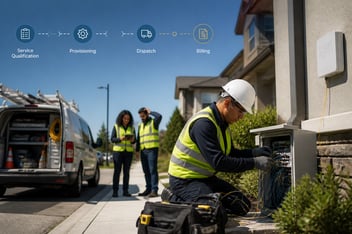
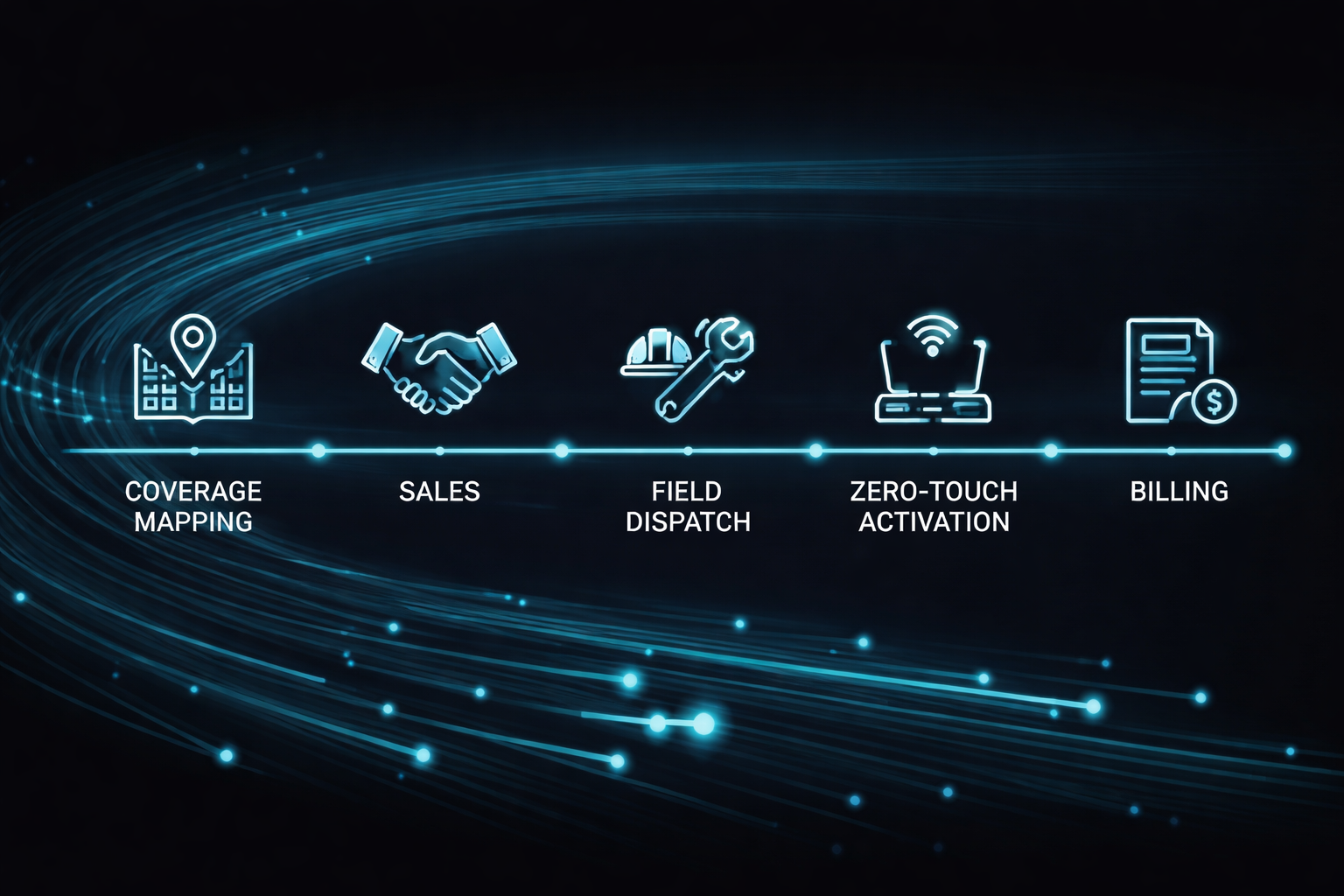
An automated OSS/BSS platform combines both layers into a single system where data flows continuously from coverage planning through sales, installation, activation, billing, and retention. Zero-touch refers specifically to the activation piece: when a technician completes an install in the field, the service provisions and the billing clock starts automatically, with no back-office intervention required.
The practical effect is fewer truck rolls, faster installs, less manual work, and better customer experiences from day one.
Why Broadband Operators Struggle With Traditional OSS/BSS Platforms
Traditional OSS/BSS platforms were built for a different era of telecom. They assume large IT teams, stable infrastructure, and long implementation timelines. For most broadband operators today, none of those assumptions hold.
Here's where traditional platforms tend to break down:
- Disconnected systems create constant data problems. When your CRM doesn't talk to your provisioning system, and your provisioning system doesn't talk to your billing platform, errors multiply. An address gets mis-classified. A service activates but billing doesn't trigger. A technician arrives at a job with wrong information. Each gap requires a human to fix it manually.
- Field operations run on guesswork. Without real-time visibility into where technicians are, what equipment they have, and what jobs are actually complete, dispatchers are flying blind. Scheduling is based on geography at best, not skills, parts inventory, or actual job duration.
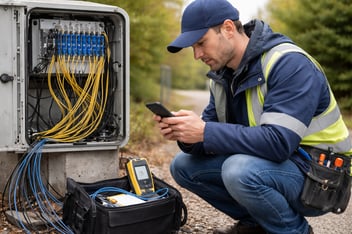
- Provisioning takes too long. Traditional systems often require back-office staff to manually configure hardware after an install. This adds time to every job, sometimes hours, and sometimes requires a second truck roll if something goes wrong. In a competitive market, a two-hour activation delay is a customer experience problem and an operational cost problem at the same time.
- Billing is reactive, not automated. When billing depends on someone closing a ticket or marking a job complete, revenue recognition gets delayed. Worse, errors in the handoff between field and billing mean some activations never trigger a bill at all.
- CSRs can't see the full picture. When a customer calls with a billing question that requires pulling up four different systems to answer, handle times go up and satisfaction goes down. Most traditional platforms were never designed to give support agents a complete, real-time view of a customer's service history, network status, and account.
- Reporting lags behind reality. If your analytics depend on overnight batch exports from multiple systems, you're always making decisions based on yesterday's data. Real-time financial and operational visibility requires a platform where everything is connected from the start.
Why Operators Resist Zero-Touch OSS/BSS Adoption
Even when operators understand the limitations of their current setup, migration feels risky. The resistance usually comes down to a handful of concerns: fear of disruption during the transition, difficulty quantifying the cost of staying put, vendor lock-in worries, and limited internal IT resources to manage the change. I've covered all ten reasons operators hesitate, and what actually addresses each one, in 10 Barriers to Zero-Touch OSS/BSS Adoption.
How Automated OSS/BSS Platforms Actually Improve Broadband Network Operations
When a modern, integrated platform is working properly, the operational improvements are visible across every stage of the business.
- Coverage and serviceability become reliable inputs to sales. Instead of sales reps guessing which addresses are serviceable, they work from a live, GIS-mapped database that shows exactly what's available where. Pre-build areas are flagged separately, leads are captured and held until service is live, and sales territories are designed around actual network footprint.
- Orders flow without manual handoffs. Whether a customer orders online, through a call center, or through a door-to-door rep, the order enters the same system with the same validation. Serviceability is confirmed at the address level in real time. Payment is captured at the point of sale. No one re-keys anything.
- Scheduling and dispatch stop wasting field capacity. AI-driven scheduling considers location, technician skills, parts inventory, and job duration to build routes that actually make sense. Customers get self-scheduling options and automated reminders. Dispatchers have real-time GPS visibility into every tech in the field. You can see exactly how this works in AEX Inc's approach to skills-based dispatch.
- Provisioning happens on-site, not hours later. Zero-touch activation means that when a technician completes an install and runs the service test, the hardware provisions automatically. The customer is live before the tech walks out the door. Billing starts in the same moment. No back-office step. No waiting. The AEX activation and provisioning stage covers the specifics of how multi-OEM, zero-touch provisioning works in practice.
- Billing runs itself. Invoices generate automatically on activation. Autopay processes without manual intervention. Collections workflows handle non-payment through automated suspension and reactivation rather than staff time. Promotions and bundle pricing apply and expire on schedule. For a deeper look at how billing connects to retention, the AEX Software platform covers the full picture.
- CSRs actually have what they need. A unified customer view means any support agent can see the full account history, current service status, network health, and billing detail in one screen. Handle times drop. First-call resolution goes up.
- Data drives decisions instead of lagging behind them. Real-time dashboards cover ARPU, churn, installation efficiency, revenue forecasting, and network performance. Leaders can see what's actually happening now, not what happened last month. The scale of the opportunity is visible in FCC broadband deployment data, which shows just how many new subscribers operators are expected to connect in the coming years.
How to Plan a Low-Risk OSS/BSS Migration
Migration doesn't have to mean a high-stakes cutover that risks your current operations. Here's a practical framework for reducing risk while moving forward.
- Start with an honest audit of your current costs. Before you can justify migration, you need to know what your current setup is actually costing you. Count truck rolls per install, average provisioning time, billing errors per month, and CSR handle times. Put a number on manual workarounds. This creates the baseline you'll measure against.
- Choose a platform that deploys fast and doesn't require custom development. For most greenfield or growth-phase operators, a platform that can be operational in six to eight weeks is far more practical than a six-month implementation. Look for templatized, configurable workflows rather than custom-built ones. This reduces both deployment time and long-term maintenance burden.
- Look for vendor-agnostic architecture. Your platform should work with the hardware you already have and the systems you need to keep. A vendor-agnostic approach protects you from being forced into equipment decisions based on software compatibility rather than network performance.
- Plan the migration in stages, not as a single cutover. A phased approach lets you validate each layer before moving on. Start with coverage and order management, then add field operations and provisioning, then migrate billing last. At each stage, you're only adding to the platform rather than replacing everything at once.
- Map data migration before you start. Address databases, customer records, and billing history are the hardest part of any migration. Understanding exactly what needs to move, what format it needs to be in, and what can be archived versus migrated is work that has to happen before deployment begins, not during it.
- Get your field teams involved early. The people who will use mobile dispatch and work order tools every day are the best judges of whether those tools actually work. Involving technicians and dispatchers in testing before go-live increases adoption and surfaces problems before they hit real customers.
- Define success metrics before you go live. Know what you're measuring: provisioning time per install, truck roll rate, billing error rate, churn, ARPU. Having a clear baseline and target makes it possible to evaluate whether the migration is actually delivering the results you expected.
What to Look for in an Automated OSS/BSS Platform in 2026
The market has matured enough that operators have real choices. Here's what separates platforms worth serious consideration from ones that will disappoint:
- End-to-end coverage, not point solutions. A provisioning tool that doesn't connect to billing, or a field dispatch system that doesn't connect to your CRM, recreates the integration problem you were trying to solve. Look for platforms that genuinely cover the full lifecycle from coverage planning through retention.
- Multi-technology support. If you're running GPON today but considering fixed wireless expansion, your platform should handle both from a single interface rather than requiring separate systems.
- Open access and closed access network support. As open access models grow, operators need platforms that can manage both network types without separate deployments.
- Real zero-touch activation. Not "near zero-touch" or "automated with manual review." Provisioning that actually triggers from the field technician's device, at the moment of install, with no back-office step.
- A self-service portal that works. Customers increasingly expect to manage their own accounts. A white-labeled portal that handles billing, plan changes, and issue reporting reduces CSR volume and improves customer satisfaction at the same time.
- Analytics built in, not bolted on. Reporting that requires exporting data to a separate BI tool creates lag and complexity. Look for platforms that surface operational and financial metrics in real time within the same interface your team is already using.
The Bottom Line
The gap between what a modern automated OSS/BSS platform can deliver and what most broadband operators are actually experiencing today is significant. The operators closing that gap are moving faster, wasting less field capacity, collecting more revenue, and keeping more customers.
Migration carries real risk if it's poorly planned. But staying on a patchwork of disconnected systems carries its own cost, one that compounds over time as subscriber bases grow and competition increases.
The operators who treat their operational platform as a strategic asset rather than a back-office necessity are the ones building businesses that scale. In 2026, that's not a differentiator. It's table stakes.
See how the AEX Software platform brings every stage together into a single platform built specifically for fiber and broadband operators.
Frequently Asked Questions
What causes broadband operators to avoid zero-touch OSS/BSS platforms?
The short version: fear of disruption during migration, underestimating the cost of the status quo, vendor lock-in concerns, and limited IT resources. For the full breakdown of all ten and how modern platforms address each one, see 10 Barriers to Zero-Touch OSS/BSS Adoption.
Why do telecom providers struggle with traditional OSS/BSS platforms?
Traditional OSS/BSS platforms were designed for large carriers with dedicated IT teams and long implementation cycles. They assume systems can be loosely connected through custom integrations, which works at scale but breaks down for smaller broadband operators. The result is disconnected data, manual workarounds between systems, delayed provisioning, billing errors, and field teams operating without the real-time information they need. The core problem is that these platforms weren't built for the speed and operational simplicity that modern fiber and broadband operators require.
How do automated OSS/BSS platforms improve broadband network operations?
They eliminate the gaps between operational stages by connecting coverage planning, order management, field dispatch, provisioning, billing, and customer support into a single data flow. This means orders don't have to be re-keyed between systems, provisioning can trigger automatically at the moment of install, billing starts without a manual step, and CSRs have a complete customer view without switching between tools. The cumulative effect is faster installs, fewer truck rolls, more reliable revenue collection, and better customer experiences.
What is zero-touch provisioning and why does it matter for broadband operators?
Zero-touch provisioning means service activation happens automatically when a technician completes an installation, no back-office step required. For the full technical picture, see What Is Zero-Touch Provisioning in Fiber Broadband?
How long does an OSS/BSS migration typically take for a broadband operator?
For most greenfield or growth-phase operators using a modern platform with templatized workflows, deployment can be operational in six to eight weeks. More complex migrations involving large existing subscriber bases, multiple legacy integrations, or highly customized billing configurations will take longer. The biggest time variables are data migration, moving address databases, customer records, and billing history, and how much custom development the chosen platform requires. Platforms that are configurable rather than custom-built significantly reduce both the timeline and the risk.
What should broadband operators look for in an OSS/BSS platform in 2026?
The most important factors are genuine end-to-end coverage across the full operational lifecycle, vendor-agnostic architecture that works with existing hardware, real zero-touch activation rather than partially automated workflows, multi-technology support for GPON and fixed wireless, and analytics built into the platform rather than requiring separate BI tools. Deployment speed and the ability to configure workflows without custom development are also critical for operators who don't have large internal IT teams.