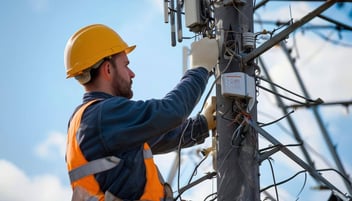
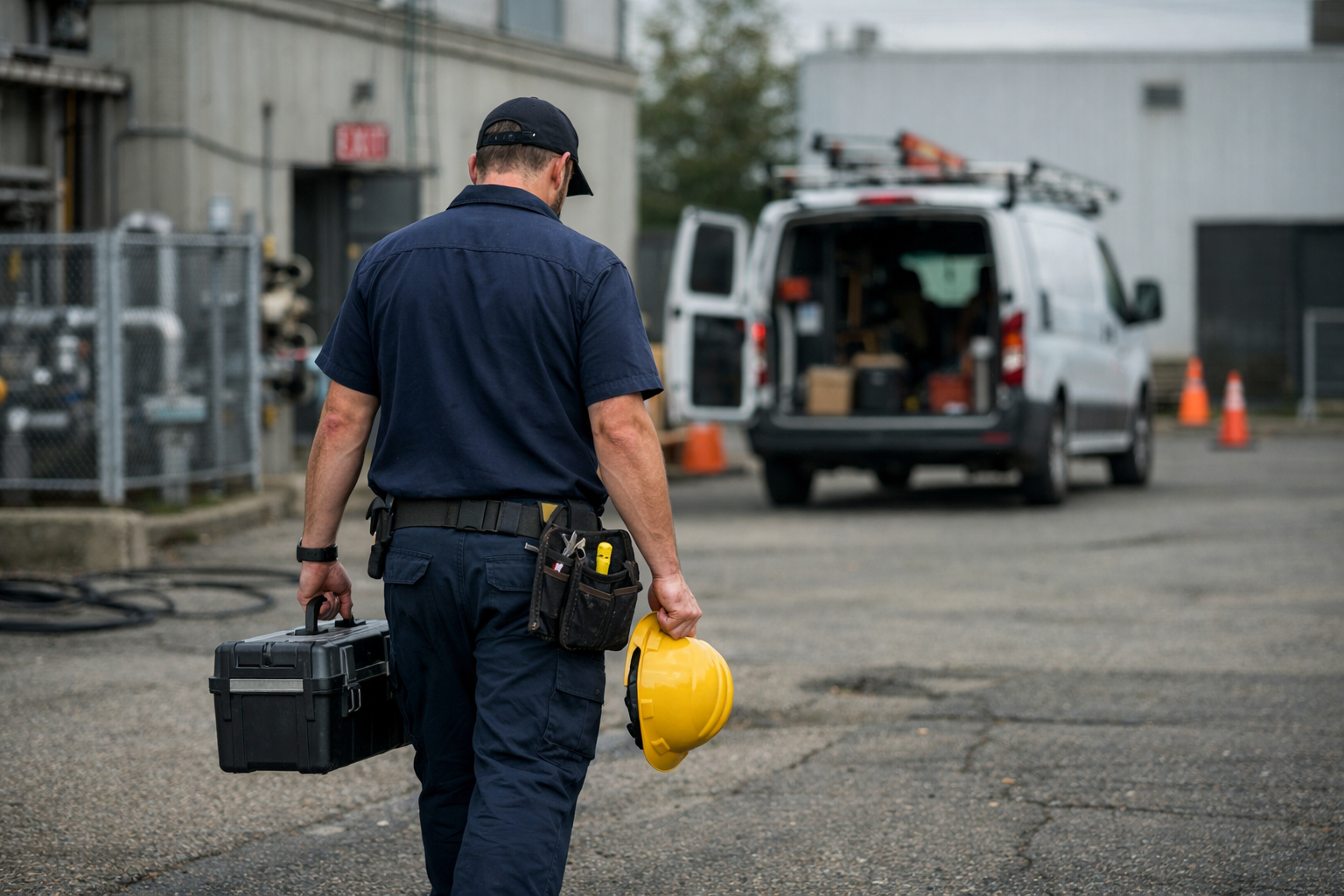
A technician arrives on site, runs the diagnosis, and leaves without completing the job. The part needed is not on the truck. The technician lacks the required certification. Or the job takes longer than the appointment window allows.
For utilities, telecom operators, and infrastructure service teams, that outcome is not just a customer-service problem. It is an operational one.
The repeat visit creates direct costs in labor, travel, and parts handling. It also creates indirect costs through SLA risk, delayed activation, customer frustration, and technician capacity lost to work that should already be closed.
First-time fix rate (FTFR) measures how often field-service organizations resolve a service request completely on the first visit, without a follow-up call, repeat dispatch, or return trip for the same issue.
What First-Time Fix Rate Measures
The calculation is straightforward:
FTFR = (Jobs completed on the first visit ÷ Total eligible jobs dispatched) × 100
Deloitte Digital’s 2025 Future of Field Service research found a meaningful performance gap between organizations with mature field-service operations and those with less mature practices. High-maturity organizations reported a 73% first-time fix rate, compared with 64% among low-maturity organizations. The research surveyed 900 field-service leaders and was designed and analyzed by Lawless Research.
These figures are directional benchmarks rather than universal targets. FTFR varies by industry, job complexity, parts requirements, technician specialization, and service model.
Read the Deloitte Future of Field Service report.
FTFR is closely related to other field-service metrics, including mean time to repair, technician utilization, repeat-visit rate, SLA compliance, and customer satisfaction. For a broader view of how these metrics connect, see the field service optimization guide.
Why First-Time Fix Rate Matters
The direct costs of a failed first visit are clear. Every repeat visit creates another truck roll, and truck-roll cost benchmarks for fiber operators show how quickly those costs add up.
For utilities and telecom operators running hundreds of jobs across distributed crews, repeat visits compound quickly. They consume technician capacity that could otherwise be used for new installations, maintenance, or higher-priority work.
The indirect costs are just as important. A failed installation can delay service activation, provisioning, billing, and revenue recognition. A single day of delay multiplied across hundreds of jobs during a build phase creates a measurable impact on revenue timing.
The relationship between field execution and billing speed is covered in From Interest to Install to Invoice: Closing the Gaps in Telecom Service.
What Drives Low First-Time Fix Rates?
Low FTFR rarely has a single cause. It usually reflects several operational gaps that contribute to a technician arriving without what they need to complete the job.
Common causes include:
- An incorrect technician or skill match
- Required parts missing from the truck or site
- Incomplete job information
- Poor pre-job qualification
- Unrealistic time estimates
- Limited access to technical documentation or support
- Scheduling based only on availability rather than capability
- Delayed communication between field teams and operations
These causes are closely connected. Fixing one without addressing the others often produces only limited improvement.
How to Increase First-Time Fix Rates
1. Match Technicians to Jobs Based on Skills
Skills-based dispatching is one of the highest-impact changes a field-service operation can make. When job assignments are driven by technician certifications, equipment experience, and job-type history, the right person arrives for the right job more consistently.
For utilities managing planned maintenance windows or telecom operators dispatching crews across multiple build zones, this is especially important. A missed skill match can create a repeat visit, delay interconnected work, and push downstream jobs off schedule.
This requires accurate technician profiles in the scheduling system and dispatch logic that factors skills into assignment decisions. The AEX Field Service platform supports skills-based assignment as part of its core dispatch workflow, matching job requirements to technician profiles before a job is confirmed.
2. Improve Parts Availability Before the Job Starts
Technicians who arrive without the right parts cannot complete the job. The solution is not necessarily to carry more inventory on every truck. It is to understand what a specific job requires before dispatch and confirm that those parts are available.
Integrated inventory management connected to work-order data allows dispatchers and technicians to verify parts availability before a job is assigned. When a required part is missing, the job can be rescheduled or parts can be staged in advance rather than discovered as a problem on site.
For infrastructure operators managing ONTs, cable runs, and network equipment across large build programs, pre-job inventory confirmation is a direct lever on both FTFR and activation timelines.
3. Give Technicians Complete Job Context Before Arrival
Incomplete job information is a leading cause of extended site time and failed completions. Technicians need site-access details, equipment history, previous service notes, configuration requirements, and location-specific instructions before they arrive.
Mobile workforce management platforms that deliver complete job context to field devices—including offline access for areas with poor connectivity—reduce the time technicians spend gathering information on site and increase the likelihood of completing the job in a single visit.
For crews working in rural or underserved areas during fiber build programs, offline capability is often essential.
4. Use Pre-Job Qualification to Reduce Scope Surprises
Not every service request is what it appears to be at intake. A brief qualification step, either through structured intake questions or a pre-visit check, reduces the chance that a technician arrives to find conditions significantly different from what was described.
For fiber installations, pre-qualification can confirm site readiness, access availability, equipment compatibility, and the expected installation scope before the visit is scheduled.
Site conditions in greenfield builds often vary from planning data. Catching that variance before dispatch saves a truck roll.
5. Provide Real-Time Support Access from the Field
Even experienced technicians encounter situations that require escalation. When field workers can access technical documentation, diagnostic information, and back-office support from their mobile device, they can resolve more issues without returning to base.
Platforms that support real-time collaboration between field technicians and operations teams extend the effective capability of the workforce without adding headcount. For lean teams managing large build programs, that can make a significant difference.
6. Use Realistic Job-Time Estimates
Insufficient time allocation is often treated as a scheduling problem, but it is frequently a data problem.
When job-time estimates are based on broad averages rather than job-specific complexity, technicians are set up to run over. Poor site qualification, unusual access requirements, equipment configuration, and location-specific conditions can all affect the time required.
Better pre-job data produces better estimates and reduces the number of jobs that cannot be completed within the assigned appointment window.
7. Connect Field Execution to the Wider Service Lifecycle
Individual process changes can improve FTFR. Sustained improvement at scale requires technology that connects scheduling, inventory, job information, provisioning, and field execution in one operational workflow.
The AEX Field Service Management platform addresses FTFR at the point where it is actually determined: before the technician leaves, not after the repeat visit is logged.
Skills-based dispatch engines match job requirements against technician certification profiles. Integrated inventory management connects parts availability to individual work orders. Mobile workforce tools deliver job context to field devices. Real-time updates keep operations teams informed while work is still underway.
When these capabilities operate together, each dispatched job is better prepared than the last. FTFR improvement becomes a function of operational design rather than individual technician performance.
Deloitte’s 2025 field-service research also found that technology maturity is associated with stronger operational performance, including higher first-time fix rates.
How to Track First-Time Fix Rate Accurately
Calculate FTFR consistently:
FTFR = First-visit fixes ÷ Total eligible jobs × 100
Define the measurement window before reporting results. A repeat visit for the same issue, asset, or address should remain connected to the original job so the metric reflects the customer’s actual experience.
Track FTFR by:
- Job type
- Technician
- Region
- Contractor
- Equipment type
- Customer segment
- Parts category
- Service territory
- Installation versus repair work
A single company-wide average can hide important problems. A team may appear healthy overall while one region, equipment type, or job category produces a high number of repeat visits.
The Role of Technology in Sustained FTFR Improvement
First-time fix rate is a lagging indicator. By the time it appears in reporting, the decisions that determined it were already made in scheduling, dispatch, inventory, job setup, and technician support.
Organizations that improve FTFR consistently work on those upstream decisions rather than simply tracking the metric more closely.
Skills-based assignment, pre-job parts confirmation, complete job context, realistic scheduling, and real-time field support each address a specific cause of repeat visits.
Taken together, they build field operations that complete more work on the first attempt, reduce cost per job, and move faster from installation to activation to revenue. See From Order to Activation: How Broadband Operations Actually Flow for more on that lifecycle.
Frequently Asked Questions
What is a good first-time fix rate for field service?
There is no universal target because FTFR varies by industry, job complexity, parts requirements, and service model. Deloitte’s 2025 research reported 73% for high-maturity organizations and 64% for low-maturity organizations. Use those figures as directional context, then benchmark your own performance by job type, region, technician, and customer segment.
What causes low first-time fix rates?
Common causes include assigning the wrong technician, missing parts, incomplete job information, poor pre-job qualification, unrealistic time estimates, and limited access to technical support while the technician is in the field.
How does skills-based dispatching improve FTFR?
Skills-based dispatching matches job requirements to technician certifications, equipment experience, and job history. This increases the likelihood that the right technician arrives with the right capability for the job.
How does inventory management connect to first-time fix rates?
Inventory management improves FTFR by confirming that required parts are available or staged before dispatch. Connecting inventory to the work order prevents technicians from arriving without the equipment needed to complete the job.
Does first-time fix rate apply to fiber installation operations?
Yes. For fiber and telecom operators, FTFR applies directly to installations. A failed installation delays activation, provisioning, billing, and customer revenue. Pre-job qualification, skills-based dispatch, complete job information, and parts readiness are especially important.
How do I track first-time fix rate accurately?
Calculate FTFR as completed first visits divided by total eligible jobs, multiplied by 100. Define the measurement window consistently and flag repeat visits for the same issue, asset, or address so the metric reflects the customer’s actual experience.